Recovery Guide After Plastic Surgery Abroad
Why should recovery after plastic surgery abroad be planned?
For people planning to undergo plastic surgery abroad, the recovery process, flight date and postoperative care are as important as the surgery itself. Receiving treatment in another country requires advance organization of transportation, accommodation, accompanying support, doctor appointments and access to care in the event of possible complications. Although Türkiye, particularly cities with developed healthcare infrastructure such as Istanbul and İzmir, is among the preferred destinations for plastic surgery and health tourism, every patient’s recovery process progresses differently.
Recovery after plastic surgery depends on the type of procedure, the scope of the surgery, the person’s general health, age, smoking status and the doctor’s recommendations. Therefore, the information below is intended as a general health tourism guide. The individual flight and care plan should be determined by the plastic surgeon who performed the procedure.
How long does recovery take after plastic surgery?
Recovery does not consist of a single phase. The first days, first weeks and following months are periods with different goals. The reduction of swelling and bruising, suture checks, return to daily activities and emergence of the final result do not occur at the same time.
The first few days
The first 24–72 hours after surgery are generally a period of rest and close monitoring. The effects of anesthesia, pain, swelling, bruising, limited mobility or fatigue may occur. During this period, it is important that the patient is not left alone, can reach the clinic or accommodation safely and can communicate with the surgical team.
Depending on the type of surgery, dressings, drains, a special compression garment or supportive clothing may be used. The patient should be given both written and verbal instructions on how these applications should be continued. The patient should not change dressings independently, alter medication doses or use products that have not been recommended.
The first one to two weeks
In many cosmetic surgery procedures, check-up examinations during the first week are important. During these appointments, wound healing, swelling, sutures, the condition of drains and signs of infection are evaluated. While some people may return to light daily activities within a short time, heavy lifting, strenuous exercise and long-distance travel may need to be postponed for a while.
The recovery timelines for procedures such as rhinoplasty, facelift, eyelid surgery, breast surgery, tummy tuck and liposuction differ from one another. For example, bruising in the facial area may affect social life, while procedures involving the abdominal area may require greater attention to movement, sleeping and sitting positions. The follow-up plan determined by the doctor takes priority over general information found online.
The first few months
While a significant portion of the swelling gradually subsides over time, it may take longer for the tissues to settle completely. Patience is particularly important when assessing the final appearance after rhinoplasty, breast surgery and body contouring procedures. Swelling or asymmetry during the early period does not always indicate a permanent result.
When can you fly after plastic surgery?
The timing of a flight after surgery is determined according to the scope of the procedure and the patient’s clinical condition. Even after minor procedures, it is not recommended to make travel plans before the first check-up has been completed. More extensive surgeries may require a longer waiting period before flying. Long-distance flights in particular should be assessed separately in terms of immobility, swelling, fluid loss and circulation problems.
The following factors are taken into consideration when deciding whether to fly:
- The type and duration of the surgery
- General condition after anesthesia
- Whether drain, suture or wound care is still ongoing
- The risk of bleeding, infection or clotting
- Flight duration and number of connections
- The patient’s ability to move
- The doctor’s assessment during the latest examination
Airline policies regarding travel after surgery may vary. Some airlines may request a doctor’s report or a fit-to-fly certificate from passengers who have recently undergone surgery. For this reason, it is advisable to contact the airline before purchasing a ticket and to find out from the healthcare provider which documents are required.
What should be considered during the flight?
If flying has been approved, the journey should be planned as comfortably as possible. Supportive clothing deemed appropriate by the doctor may be preferred instead of tight clothing. Avoiding sitting in the same position for long periods, taking short walks as permitted and moving the ankles may be beneficial for circulation. However, the surgeon’s instructions should be followed regarding movement, exercise or compression products.
It is important to drink sufficient fluids, avoid alcohol and take prescribed medications as directed by the doctor. Medical documents, prescriptions, necessary medications and care supplies should be kept in hand luggage. Lifting heavy suitcases or reaching into overhead compartments may not be appropriate after certain surgeries. Therefore, support from an accompanying person should be arranged.
Essential steps in postoperative care
Wound and dressing care
The wound area should be kept clean and dry, and dressings should be changed only as recommended by the healthcare team. Applying pressure to the suture line, removing scabs, entering a pool or the sea and using creams without the doctor’s approval may negatively affect healing. If rapidly increasing redness, foul-smelling discharge, wound opening or ongoing bleeding is noticed, the healthcare provider should be contacted without delay.
Medication use
Painkillers, antibiotics and other medications should be used only as prescribed. Medications, herbal products and dietary supplements that may increase the risk of bleeding should not be taken without the doctor’s knowledge. The names of medications, administration times and possible warnings should be kept in writing. It may also be useful to obtain digital copies of prescriptions and medical reports before leaving the country.
Nutrition and lifestyle
A balanced diet, adequate fluid intake and regular rest are important during recovery. Since smoking and nicotine products may negatively affect wound healing, the surgeon’s warnings on this subject should be followed. Alcohol consumption may be inadvisable, particularly while taking medication and during the early recovery period.
Protection from the sun is also important, particularly regarding surgical scars on the face and body. A doctor or healthcare professional should be consulted about when sunscreen products may be used and whether they can be applied to the wound area.
How is follow-up planned within the scope of health tourism in Türkiye?
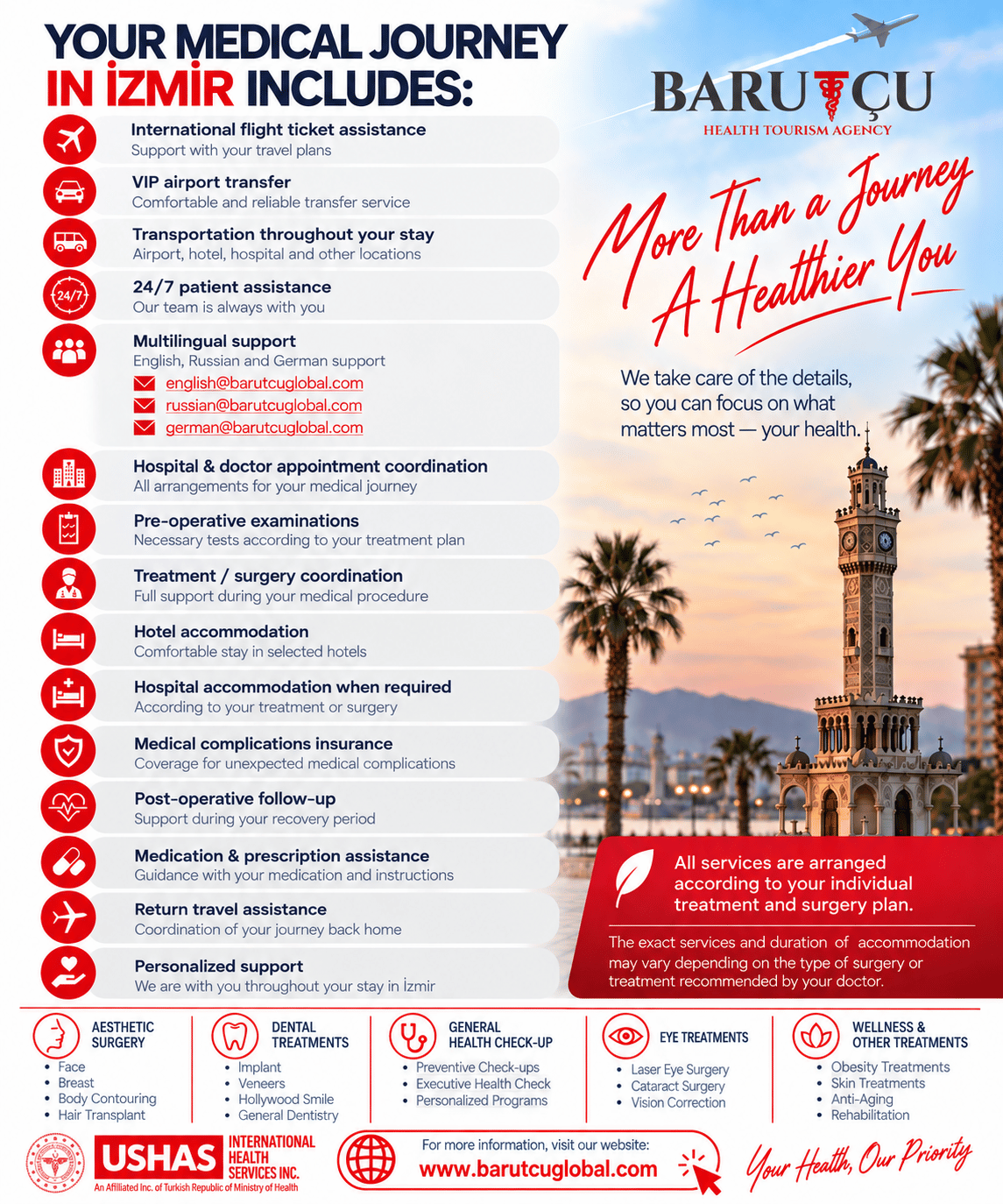
For international patients considering surgery in Türkiye, the treatment plan should not cover only the day of the operation. Preoperative assessment, surgery, accommodation, transfers, follow-up examinations and the return journey should be planned together. In cities such as İzmir, where access to healthcare services is strong, the distance between the clinic and accommodation, ease of transportation and follow-up appointments should be assessed in advance.
The following questions should be clarified during health tourism planning:
- When will the first postoperative check-up take place?
- If drains or sutures are present, where will they be removed?
- Will a doctor’s assessment be performed before the flight?
- Will online follow-up be provided after returning home?
- Which healthcare unit should be contacted in the event of an unexpected symptom?
- How will transportation between the accommodation, clinic and airport be organized?
Reliable health tourism consultancy should focus not only on selecting a clinic but also on postoperative communication and coordination. Before the procedure, patients should clearly learn about the healthcare provider’s licensing and accreditation status, the doctor’s qualifications, the planned check-ups and the scope of any possible additional services.
Which symptoms require urgent medical evaluation?
Some discomfort may be expected after surgery; however, the severity of symptoms or rapid deterioration may require medical evaluation. In cases such as shortness of breath, chest pain, fainting, significant swelling or pain in one leg, bleeding that does not stop, high fever, rapidly increasing redness or foul-smelling discharge, emergency medical care should be sought.
These symptoms do not always mean that a serious complication has occurred; however, they should not be interpreted remotely and must be reported to a healthcare professional without delay. It is important for international patients to know which healthcare communication points they can contact in Türkiye and in their home countries before travelling.
Conclusion: Proper planning for a safe recovery
Recovery after plastic surgery abroad is a process that should be planned as carefully as the surgery itself. Not setting the flight date too early, completing the doctor’s examination, following wound care instructions and arranging the necessary support for a long journey are the essential steps for safe travel. Patients planning treatment in Türkiye, particularly in centres with easy access to healthcare services such as İzmir, should assess the clinic, accommodation, transfers and postoperative follow-up processes as one integrated plan.
Since every patient’s recovery process is different, general information does not replace personalized medical advice. The most appropriate flight timing, care practices and follow-up appointments should be determined based on the assessment of the plastic surgeon who performed the surgery.