Medical Documents to Prepare for Eye Treatment Abroad
Planning eye treatment abroad begins well before booking a flight. Whether you are seeking a cataract consultation, laser vision correction, corneal treatment, glaucoma assessment or retinal care, complete and well-organised medical documents help the ophthalmologist understand your condition safely and efficiently. They also make communication easier between your local doctor, the international clinic and your chosen healthcare provider in Türkiye.
This guide explains which medical records to prepare, how to send them securely and what additional information may be useful before travelling to Izmir or another international treatment destination. Your documents do not replace an in-person examination; the final diagnosis and treatment plan should always be confirmed by the treating ophthalmologist.
Why Medical Records Matter When Seeking Eye Treatment Abroad
International patients may have limited time at their destination. Previous examination results can give the medical team a clearer picture of your eye health before your appointment and help determine which tests may be needed. In some cases, records can also indicate whether you may be suitable for a particular procedure or whether further assessment is required.
Good documentation can help the clinic:
- Review your eye history before the consultation
- Understand changes in your vision over time
- Identify previous operations, injuries or complications
- Assess current medicines and relevant health conditions
- Prepare an appropriate consultation and diagnostic plan
- Coordinate follow-up care with your ophthalmologist at home
Not every patient will have every type of report. Send what you already have rather than delaying your enquiry while trying to repeat old tests independently.
Essential Eye Medical Documents
1. Recent ophthalmology examination reports
Include reports from recent eye examinations, particularly if your vision has changed or you are considering surgery. These may include your visual acuity, eye pressure, refraction and the ophthalmologist’s clinical findings.
If available, the report should identify whether the findings relate to the right eye, left eye or both eyes. Eye-care professionals commonly use OD for the right eye and OS for the left eye, although terminology may vary by country.
2. Glasses and contact lens prescription
Send your current prescription, including sphere, cylinder, axis and, where applicable, reading addition. If you wear contact lenses, also include the lens type, power and wearing schedule.
Patients considering laser eye surgery may need to stop wearing contact lenses for a period before certain measurements. The required period depends on the lens type and the clinic’s assessment, so ask the provider for specific instructions rather than making assumptions.
3. Diagnostic imaging and test results
Eye treatment decisions may depend on specialised measurements. Attach any relevant results you have, such as:
- Optical coherence tomography (OCT) scans of the retina or optic nerve
- Visual field test results, especially for glaucoma evaluation
- Corneal topography or tomography
- Corneal pachymetry and other corneal measurements
- Biometry results for cataract or lens surgery planning
- Fundus photographs
- Intraocular pressure measurements
- Macular or retinal imaging
- Ultrasound or other ocular imaging reports
Whenever possible, send the original report together with the image files. A screenshot without patient identification, date or clinical interpretation may be difficult for a specialist to assess. The clinic may still repeat some tests using its own equipment because measurements can vary between devices and may need to be updated.
4. Previous eye surgery and treatment records
If you have undergone any eye procedure, provide the operative report and discharge summary. This is particularly important after cataract surgery, corneal surgery, retinal procedures, glaucoma treatment, laser vision correction or eye injury.
Useful information may include:
- The name and date of the procedure
- Which eye was treated
- Any complications during or after treatment
- Details of implanted lenses or other medical devices
- Postoperative examination results
- Previous prescriptions for eye drops
For intraocular lens procedures, an implant card or lens information sheet can be especially helpful. If you have had more than one procedure, organise the documents chronologically.
Medical Information Beyond Your Eyes
Some general health conditions and medicines can influence eye assessment, anaesthesia planning, healing or the suitability of a procedure. Prepare a concise medical history that includes:
- Diabetes, hypertension, autoimmune disease or thyroid disorders
- Heart, kidney or neurological conditions
- Bleeding or clotting disorders
- Previous infections or significant hospital admissions
- Known allergies, including medicine allergies
- Pregnancy or breastfeeding, where relevant
- Any difficulty lying flat, remaining still or communicating during examinations
Provide an up-to-date medication list rather than relying only on medicine packaging. Include the generic or active ingredient name, dose, frequency and reason for use. This should cover prescription medicines, insulin, anticoagulants, steroids, supplements and regular over-the-counter products.
Do not stop or change any medicine before travelling unless your own doctor or the treating medical team specifically advises you to do so.
How to Prepare Documents for an International Clinic
Use clear, dated files
PDF files are usually suitable for medical reports, while high-resolution JPG, PNG or DICOM files may be useful for scans and diagnostic images. Name files clearly, for example:
Smith_Jane_OCT_RightEye_March2025.pdfSmith_Jane_CataractOperationReport_LeftEye.pdf
Make sure every document includes your name, date of birth or patient number, the examination date and the eye concerned. Avoid sending blurry photographs of pages when a scan or original digital file is available.
Arrange translation when necessary
English is commonly used for international medical communication, but a clinic may request documents in English or another language understood by the treating team. If your records are in Russian, Arabic, German, French or another language, ask whether a translation is required before paying for a certified translation.
Do not translate medical abbreviations yourself if you are uncertain about their meaning. A professional medical translation can reduce misunderstandings, particularly for surgical history, medicine names and laboratory results.
Protect your personal information
Eye records contain sensitive health information. Send them through the clinic’s official secure portal, encrypted email system or another approved channel. Confirm the recipient before sharing documents and avoid posting medical records in public messaging groups or social media.
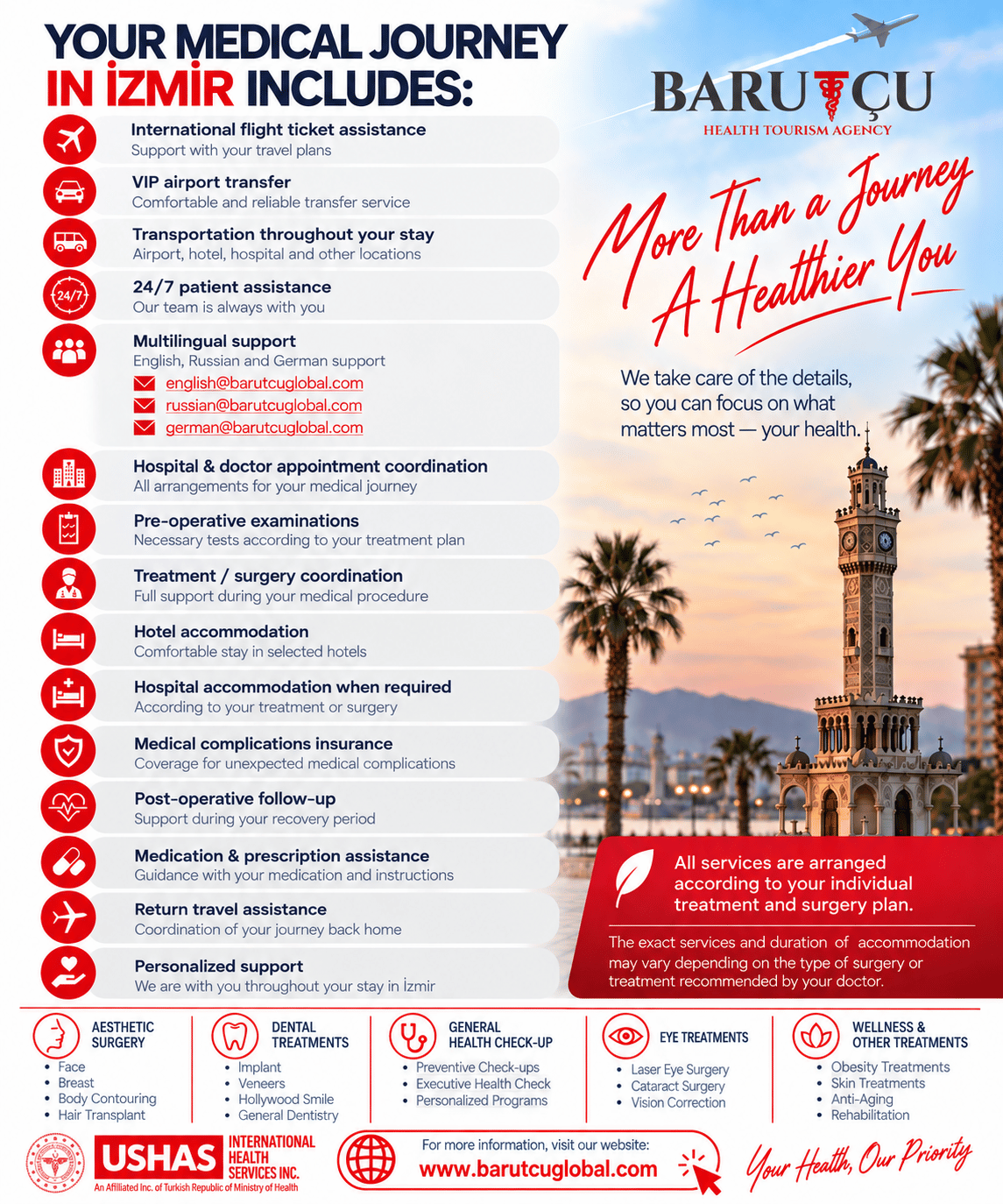
When working with Barutçu Global, international patients can ask the patient coordination team which documents are required, how files should be sent and who will review them. A coordinator may also help organise communication with the clinic in Izmir, Türkiye.
Documents to Bring When Travelling to Türkiye
Keep important records available in both digital and printed form. Your travel folder may include:
- Passport and relevant travel or visa documents
- Medical reports and diagnostic images
- Medication list and original medicine packaging
- Allergy information and emergency contact details
- Health insurance information, if applicable
- Details of your local ophthalmologist
- Clinic appointment confirmation and contact information
If you use regular eye drops, carry enough for the journey in your hand luggage and keep them in their original packaging. Ask the airline and your doctor about any special requirements for temperature-sensitive medicines.
Questions to Ask Before Booking Eye Treatment Abroad
Before confirming travel, ask the clinic:
- Which medical documents are needed for the initial review?
- How recent should eye tests be?
- Will additional examinations be performed after arrival?
- How long should I stay in Izmir or the treatment location?
- Will I need an escort for the journey back to my accommodation?
- When can I safely fly after the procedure?
- What follow-up appointments are included?
- Who should I contact if I have a concern after returning home?
- Which records will I receive for my local eye doctor?
Travel timing can vary according to the procedure, your general health and the surgeon’s assessment. Do not arrange a tight itinerary until the clinic confirms the expected consultation, treatment and follow-up schedule.
After Treatment: Keep Your Follow-Up Records
Before leaving Türkiye, ask for a written summary of the consultation or procedure. It may include the diagnosis, treatment performed, medicines prescribed, follow-up findings, restrictions and the recommended date for review. Request copies of relevant test results and implant information where applicable.
Share these records with your ophthalmologist at home. Coordinated follow-up is particularly important if you develop worsening pain, marked redness, sudden vision changes, increasing light sensitivity, discharge or any symptom that concerns you. In such situations, contact the treating clinic and seek urgent local medical assessment when appropriate.
Conclusion
Preparing complete eye medical documents is one of the most practical steps when arranging treatment abroad. Recent examination reports, imaging, prescriptions, surgical records, medication details and general health information allow the international ophthalmology team to plan a more informed consultation. Organise files clearly, protect your privacy and confirm the clinic’s requirements before travelling. With appropriate preparation and a reliable follow-up plan, patients considering eye treatment in Izmir or elsewhere in Türkiye can approach the process with greater clarity and confidence.