Follow-Up Care After Surgery Abroad: How to Build a Handover Plan Before You Return Home
Undergoing surgery abroad can offer access to experienced specialists and internationally focused healthcare services, but your care does not end when you leave the hospital. A safe recovery also depends on what happens after you return home. Before travelling back, you should have a clear handover plan that explains your operation, current condition, medications, wound care, follow-up schedule and what to do if a concern develops.
Whether you have had cosmetic surgery, dental surgery, orthopaedic treatment or another procedure in Izmir, Türkiye, organising your post-operative care in advance can make communication easier between your medical team abroad and your healthcare professionals at home. The following questions can help international patients prepare for a safer and more coordinated recovery.
Why is a handover plan important after surgery abroad?
A handover plan transfers essential medical information from the healthcare team abroad to the professionals who may support you after you return home. It reduces the risk of missing important instructions and helps your local doctor understand what treatment you received.
Your home-based healthcare provider may need to know the exact procedure performed, the type of anaesthesia used, any implants or medical devices involved, medicines prescribed, and whether any complications occurred. A well-prepared handover plan can also prevent duplicated tests, medication misunderstandings and delays in seeking appropriate care.
Follow-up arrangements are particularly important if you will need wound checks, suture or drain removal, physiotherapy, dental reviews, imaging or laboratory tests after travelling.
What documents should I request before leaving the clinic or hospital?
Ask your medical provider for a complete discharge and follow-up file before departure. Ideally, it should be written in English or include a clear translation that your healthcare provider at home can understand.
Your file may include:
- A discharge summary
- The name and date of the procedure
- The surgeon’s name and the facility’s contact details
- The operative report, if available
- A list of medicines, including dose and duration
- Allergy and medical history information
- Details of implants, prostheses or medical devices
- Wound-care and activity instructions
- Follow-up recommendations and appointment dates
- Laboratory, pathology or imaging reports, where relevant
- Information about drains, dressings, sutures or staples
- Written guidance on warning signs and emergency contacts
Keep both printed and digital copies. Save the documents securely on your phone or in cloud storage, but do not rely on digital access alone while travelling.
What should the discharge summary explain?
A discharge summary should provide a concise clinical overview that another healthcare professional can use. It should state what was done, when it was done and how you were progressing when you left the facility.
Ask whether the summary includes the surgical findings, any complications, blood loss concerns, allergies, test results and the condition of the wound. If a sample was sent for pathology, confirm how and when the result will be communicated to you.
If you received an implant, ask for the product name, model, serial number and manufacturer information when applicable. This information can be useful for future medical assessments, imaging appointments or replacement documentation.
How can I arrange follow-up care in my home country?
Whenever possible, contact a suitable healthcare professional before your surgery or before you fly home. Depending on the procedure, this may be your primary care doctor, surgeon, dentist, physiotherapist, specialist nurse or another relevant clinician.
Ask your overseas provider what type of follow-up is normally recommended and when it should take place. Then discuss this schedule with your local healthcare team. The timing may need to be adapted according to your procedure, recovery and local clinical practice.
For complex surgery, you may need a specialist who regularly manages similar cases. Your medical tourism coordinator or provider in Izmir may be able to share the relevant medical records, but you should confirm that you have personal access to them as well.
What if my local doctor is not familiar with the overseas provider?
Your local doctor does not need a prior relationship with the clinic abroad to provide appropriate care. Clear documentation and direct communication are usually more important. Ask the overseas provider whether a surgeon or clinical coordinator can answer follow-up questions by email or telephone.
Give your home healthcare professional permission to communicate with the overseas team when necessary, subject to local privacy requirements. If language is a concern, request a professional translation rather than relying on informal translation for important clinical information.
Which medication information should I bring home?
Make sure you understand every medicine you are taking before leaving. Your medication list should include the generic name, strength, dosage, timing, purpose and planned duration. It should also state whether a medicine should be taken with food and whether it replaces or adds to a medicine you already use.
Ask specifically about pain relief, antibiotics, blood-thinning medicines, anti-inflammatory drugs and medicines that may affect bleeding or sedation. Do not stop, restart or combine medicines based only on general online advice. Your surgeon or a qualified healthcare professional should explain how your prescribed medicines fit with your existing treatment.
Check whether the medicines are legal and permitted in your destination country. Keep them in their original packaging and carry a copy of the prescription or a letter from the prescribing clinician, especially when travelling internationally.
What wound-care instructions should I clarify?
Before discharge, ask how to care for the wound and dressing, when the dressing should be changed, and whether the wound should be kept dry. Confirm whether you need a specific type of dressing or cleaning product.
You should also ask when sutures, staples or drains need to be removed and who can perform this safely at home. If you have a drain, request written instructions for monitoring and recording the output, along with a clear plan for removal.
It can be helpful to ask whether you may take photographs of the wound for remote review, if this is recommended by your care team. Photographs should not replace an in-person assessment when one is necessary.
When is it safe to fly after surgery abroad?
There is no single travel timeline that applies to every operation. The appropriate time to fly depends on the type of surgery, your health, the length of the journey, your mobility and your risk of complications.
Ask your surgeon for written confirmation that you are medically fit to travel and check whether your airline has specific requirements. Long flights may involve prolonged sitting, which can be relevant after some procedures. Your clinical team can advise whether you need mobility precautions, assistance at the airport or other travel arrangements.
Do not travel if you have been told that you are not fit to fly or if you develop concerning symptoms. If you are unsure, seek medical advice before beginning your journey.
What warning signs should I monitor after returning home?
Your discharge instructions should explain which symptoms require urgent medical attention. In general, seek prompt professional advice if you develop increasing pain, spreading redness, worsening swelling, persistent fever, pus or an unpleasant-smelling discharge, wound separation, uncontrolled bleeding or a sudden deterioration in your condition.
Breathing difficulty, chest pain, fainting, confusion, severe allergic symptoms or sudden one-sided leg swelling require urgent emergency assessment. These signs can have different causes, and online information cannot determine the correct diagnosis.
Before leaving Türkiye, save the emergency number for your destination and identify where you can obtain urgent medical care near your home. If you are travelling with a companion, make sure they also know the warning signs and have access to your documents.
How should I share my medical records securely?
Use a secure method agreed with your healthcare professionals. You may need to share your discharge summary, operative report, medication list, test results and relevant photographs. Avoid sending sensitive medical information through unsecured public channels whenever possible.
Check that files are complete and readable before travelling. Use consistent file names and keep a simple timeline of important dates, such as the operation, discharge, medication changes and planned reviews. This can make your medical history easier to understand during an appointment at home.
What should I ask my healthcare provider in Türkiye before departure?
Consider asking the following questions:
- What exactly was done during the operation?
- What is a normal part of recovery, and which symptoms are concerning?
- When should my first follow-up appointment take place?
- Who will review me if I have a problem after returning home?
- How can I contact the clinic or surgeon outside office hours?
- When can I shower, work, exercise or resume normal activities?
- Do I need wound checks, suture removal, imaging or blood tests?
- Are there any travel, flying or insurance restrictions?
- Which costs are included, and which follow-up services may be charged separately?
Ask for answers in writing. Clear written instructions are easier to review later, particularly after anaesthesia, during a long journey or when you are managing several medicines.
Does travel insurance cover complications after surgery abroad?
Do not assume that standard travel insurance covers planned medical treatment or complications related to it. Read the policy carefully and ask the insurer specific questions before travelling. You may need specialist medical travel insurance that addresses elective treatment abroad, postoperative care and emergency repatriation.
Keep your policy details, insurer contact information and medical assistance number with your documents. Understand whether you are expected to contact the insurer before receiving non-emergency treatment.
How can Barutçu Global support a smoother handover?
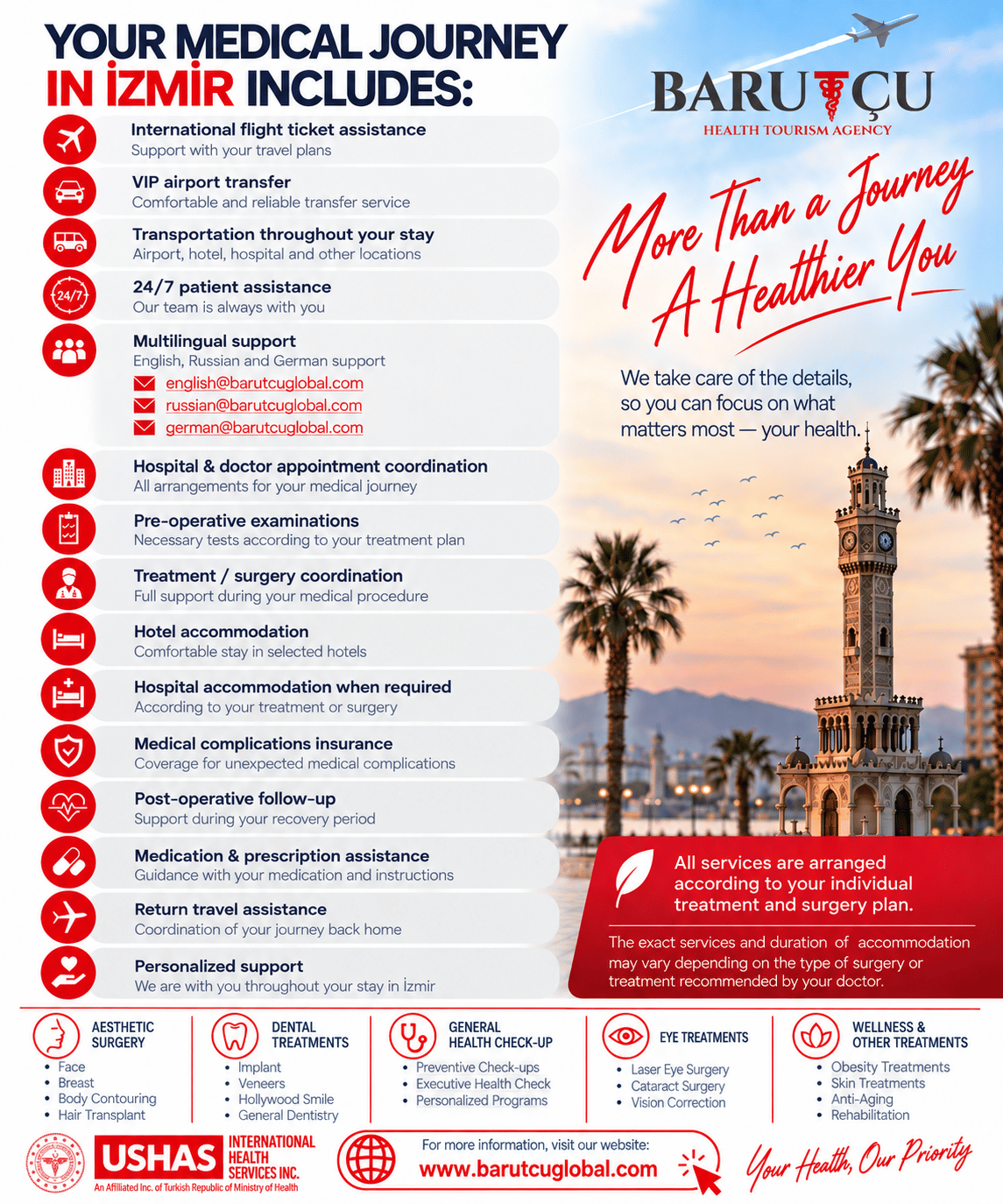
A reliable international patient service should help you understand the treatment pathway, prepare relevant documentation and coordinate communication with the healthcare provider. At Barutçu Global, patients can discuss practical arrangements for treatment in Türkiye, including how follow-up information may be organised before returning home.
However, coordination support does not replace medical assessment. Your surgeon and your healthcare professionals at home remain responsible for clinical decisions within their care. Always request independent medical advice if you are worried about your recovery.
What is the most important part of a postoperative handover plan?
The most important step is to prepare before you leave the country where your surgery took place. Obtain complete records, confirm your medicines and wound-care instructions, arrange follow-up at home, understand warning signs and verify how to contact both medical teams.
A carefully organised handover plan helps connect your care in Türkiye with your recovery at home. By planning communication and follow-up in advance, international patients can return with clearer expectations and the information needed to support a safer postoperative journey.