Treating Gynecomastia Abroad: Questions to Ask Your Surgeon
Choosing gynecomastia treatment abroad is an important medical decision, not simply a travel arrangement. Men considering male breast reduction in Türkiye or another country should understand the cause of breast enlargement, the available surgical techniques, the surgeon’s experience, and the practical requirements of travelling for care. A well-prepared consultation can help you compare treatment options safely and decide whether a clinic in İzmir, Türkiye, is suitable for your needs.
This guide provides key questions to ask during an online or in-person consultation with a gynecomastia surgeon. It is intended for general education and does not replace an examination, diagnosis, or personalised medical advice.
What Is Gynecomastia?
Gynecomastia is the enlargement of male breast tissue. It may affect one or both sides and can occur during puberty, adulthood, or later life. In some patients, the enlargement is mainly caused by glandular breast tissue. In others, excess fat contributes significantly to the breast contour. Some people have a combination of glandular tissue, fat, and loose skin.
Before discussing surgery, a qualified doctor should assess your medical history and determine whether the enlargement is true gynecomastia, chest fat associated with weight gain, or a combination of both. Hormonal conditions, certain medicines, liver or kidney problems, thyroid disorders, and other health issues may sometimes be relevant.
Questions About Your Diagnosis and Suitability for Surgery
A consultation should begin with an appropriate medical assessment. Ask the surgeon:
- What is the likely cause of my breast enlargement?
- Do I have glandular tissue, excess fat, loose skin, or a combination?
- Do you recommend any blood tests, hormone tests, imaging, or additional examinations?
- Could any medication or underlying health condition be contributing to the problem?
- Am I a suitable candidate for gynecomastia surgery at this stage?
- Would losing weight or treating an underlying condition change the recommended approach?
- Is there any reason surgery should be delayed or avoided?
These questions are especially important when arranging treatment internationally. A reputable clinic should not confirm a surgical plan based only on photographs or a short online message. Photographs may help with preliminary communication, but they cannot replace a physical examination when one is clinically necessary.
Which Gynecomastia Surgery Technique Is Recommended?
The procedure used for male breast reduction depends on the tissue composition, the amount of enlargement, skin elasticity, and the desired chest contour. Common techniques include liposuction, surgical removal of glandular tissue, or a combination of both.
Liposuction
Liposuction may be suitable when excess fatty tissue is a major contributor to chest fullness and the skin has adequate elasticity. It removes fat through small incisions but does not remove firm glandular tissue.
Excision of Glandular Tissue
When firm breast tissue is present behind the nipple or areola, direct excision may be required. This involves removing the tissue through an incision, often positioned around the edge of the areola when clinically appropriate.
Combination Treatment and Skin Removal
Many patients need both liposuction and excision. In cases involving substantial enlargement or loose skin, additional skin-reduction techniques may be considered. These can involve longer scars and a different recovery process.
Ask your surgeon:
- Which technique or combination of techniques do you recommend for me?
- Why is this approach more appropriate than liposuction or excision alone?
- Where will the incisions and scars be located?
- Could the shape or position of my nipples change?
- Is skin removal likely to be necessary?
- How will you aim to create a natural and balanced chest contour?
Questions About the Surgeon’s Experience
When researching gynecomastia surgery abroad, the surgeon’s qualifications and relevant experience should be a priority. Experience in general cosmetic surgery does not always mean extensive experience with male breast reduction.
Consider asking:
- What is your specialist training and professional registration?
- How frequently do you perform gynecomastia surgery?
- How do you manage different grades and causes of gynecomastia?
- Will you personally perform the operation?
- Can I see appropriately consented before-and-after examples of similar cases?
- What complications have you encountered, and how are they managed?
- Where will the operation take place, and is the facility licensed and equipped for the procedure?
Before-and-after images can provide useful information about the surgeon’s style, but they should not be treated as a promise of a particular result. Your anatomy, skin quality, tissue distribution, healing response, and expectations all influence the outcome.
Understanding Risks, Limitations, and Possible Results
Every surgical procedure carries risks. Your surgeon should explain the benefits and limitations of treatment in clear language. Possible complications of gynecomastia surgery may include bleeding, infection, fluid accumulation, altered nipple sensation, contour irregularity, asymmetry, visible scarring, delayed healing, recurrence, or the need for revision surgery.
Ask specifically:
- What are the most relevant risks in my case?
- How might smoking, vaping, alcohol use, diabetes, or medication affect healing?
- What result is realistic for my body type?
- Could some asymmetry remain after surgery?
- What happens if I am dissatisfied with the result?
- What is your policy if a complication develops after I return home?
A responsible consultation should include a balanced discussion rather than only a focus on attractive results. Be cautious if a provider guarantees a perfect chest, promises a complication-free procedure, or avoids answering questions about aftercare and revision surgery.
Questions About Anaesthesia and the Surgical Process
Gynecomastia surgery may be performed under local anaesthesia with sedation or general anaesthesia, depending on the planned procedure and the surgeon’s assessment. The anaesthesia plan should be determined by the clinical team, not selected solely for convenience.
Ask:
- What type of anaesthesia is recommended and why?
- Who will provide and monitor the anaesthesia?
- How long is the procedure expected to take?
- Will I stay overnight or leave the facility on the same day?
- What pre-operative tests are required?
- Which medicines or supplements should I disclose or temporarily stop?
Always provide complete information about your medical history, allergies, previous operations, regular medicines, and any use of steroids or hormone-related products. Do not stop prescribed medication without advice from an appropriate healthcare professional.
What Should You Ask About Recovery?
Recovery varies according to the extent of surgery and the individual patient. Swelling, bruising, tightness, and temporary changes in sensation can occur. A compression garment is commonly recommended, but the surgeon should explain when and how it should be used.
Ask your surgeon or care team:
- How many nights should I plan to stay in İzmir or the treatment destination?
- When will my first post-operative check take place?
- When can I shower and return to desk-based work?
- When can I resume exercise, weight training, swimming, and contact sports?
- How long may swelling and bruising last?
- Will I need wound care or suture removal?
- Which symptoms require urgent medical attention?
- How will follow-up be arranged after I return home?
Travelling too soon after surgery may increase stress and can make it more difficult to respond to unexpected symptoms. Your surgeon should provide individualised guidance about flying, airport transfers, physical activity, and the length of your stay.
Planning Gynecomastia Surgery in İzmir, Türkiye
İzmir is a major Turkish city with international transport links and a wide range of medical services. If you are considering gynecomastia treatment in İzmir, assess the complete care pathway rather than choosing based only on an advertised package or price.
Before booking, confirm:
- Whether the surgeon and facility are properly authorised and qualified
- Whether consultation, surgery, anaesthesia, medicines, and follow-up are included
- Whether an interpreter is available if required
- Who will be your point of contact before and after surgery
- How complications or additional treatment would be handled
- Whether your travel insurance covers medical travel and related complications
- What documents you will receive for your local doctor after treatment
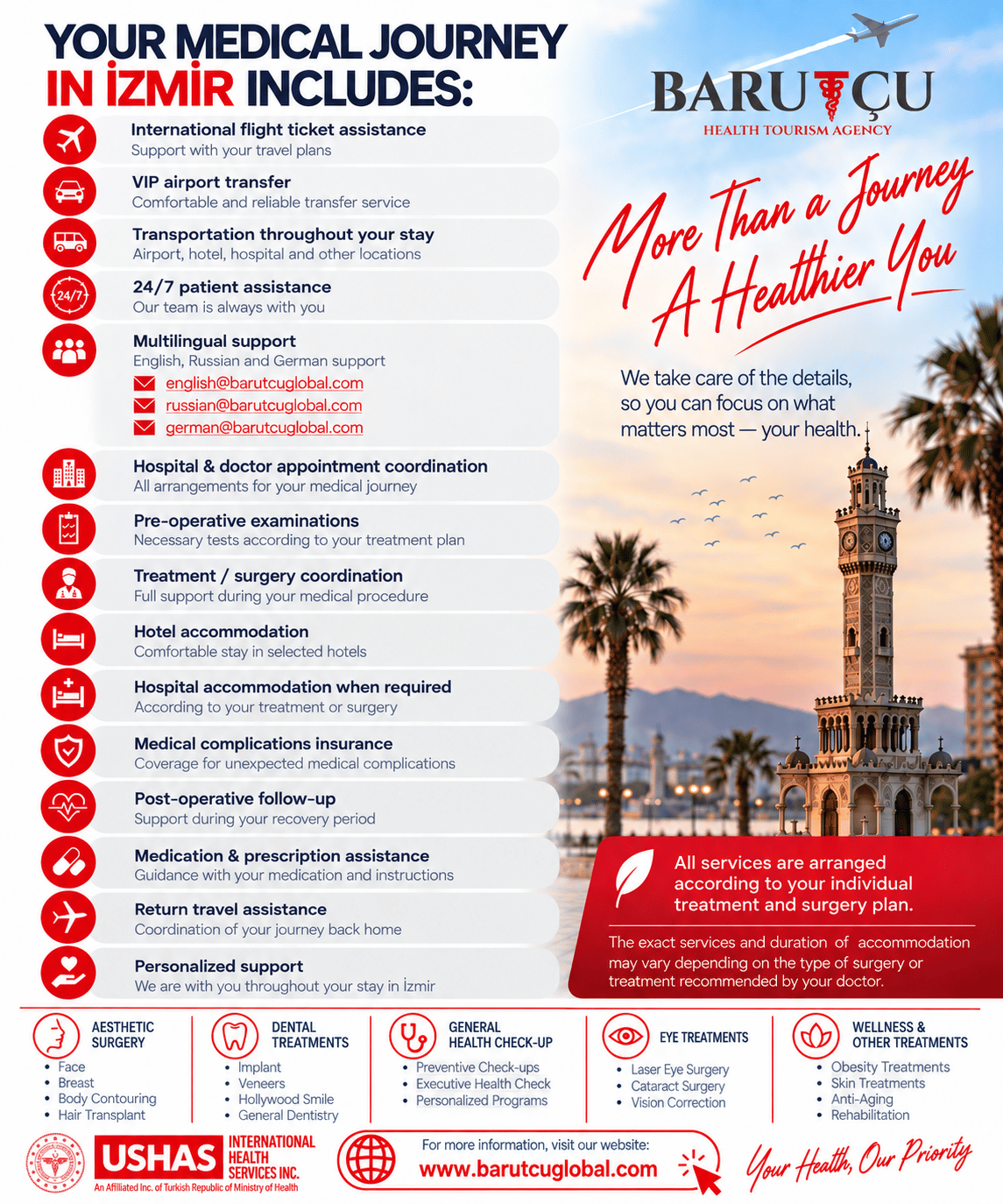
Medical tourism coordinators such as Barutçu Global may help international patients organise communication, appointments, transfers, and accommodation-related logistics. However, patients should still review the surgeon’s credentials, treatment plan, facility information, and consent documents directly with the medical team.
Questions About Price and the Treatment Package
The cost of gynecomastia surgery abroad can vary according to the technique, anaesthesia, hospital or clinic fees, surgeon expertise, required tests, follow-up, and the complexity of the case. An unusually low quote may not include every necessary service.
Ask for a written breakdown covering:
- Consultation and diagnostic assessments
- Surgeon and anaesthesia fees
- Facility and operating-room costs
- Post-operative garments and prescribed medicines
- Follow-up appointments and wound checks
- Transfers, accommodation, or translation services, if offered
- Potential additional costs if further treatment is required
Do not make a decision based on price alone. The quality of medical assessment, surgical planning, safety standards, and continuity of care are essential parts of the value of treatment abroad.
How to Prepare for Your Consultation
To make the consultation more useful, prepare a list of your medical conditions, medicines, allergies, previous operations, weight changes, and the duration of your symptoms. You may also wish to prepare questions about scars, chest shape, nipple appearance, recovery, and long-term expectations.
Ask for written information about the proposed procedure and take time to consider it. If you feel pressured to book immediately, seek an additional medical opinion before making a decision.
Conclusion
Gynecomastia treatment abroad can be considered by patients who want access to experienced surgeons and coordinated international care, but careful preparation is essential. Ask about the diagnosis, recommended technique, surgeon’s experience, risks, recovery, follow-up, facility standards, and the full cost of care. Whether you are exploring treatment in İzmir, Türkiye, or another destination, an informed decision should be based on medical suitability and safe continuity of care—not on promotional claims alone.
This article is for general information only. Gynecomastia surgery should be discussed with a qualified surgeon following an appropriate medical assessment. Individual treatment recommendations and recovery times may vary.