Cataract Surgery Abroad: Questions About Lens Options, Travel and Follow-Up
Choosing cataract surgery abroad can offer access to experienced ophthalmology teams, modern surgical facilities and coordinated medical travel services. However, the decision should be based on more than destination or cost. International patients also need to understand the available intraocular lens options, prepare carefully for travel, and arrange appropriate follow-up after returning home. This guide explains the key questions to ask when considering cataract surgery in Türkiye, including treatment planning in Izmir.
What Is Cataract Surgery?
A cataract is a clouding of the eye’s natural lens. It can cause blurred or hazy vision, glare around lights, reduced contrast and difficulty seeing at night. Cataracts commonly develop with age, although they may also be associated with eye injury, certain medical conditions or previous eye surgery.
During cataract surgery, the cloudy natural lens is removed and replaced with an artificial intraocular lens, often called an IOL. The procedure is usually performed using small-incision techniques and may be completed under local anaesthesia. The exact surgical approach depends on the patient’s eye health, the surgeon’s assessment and the technology available at the clinic or hospital.
Cataract surgery is a medical procedure, not simply a vision-correction package. A detailed eye examination is essential before deciding whether surgery is appropriate and which lens may be suitable.
Why Do Patients Consider Cataract Surgery Abroad?
Patients may explore treatment overseas because they are seeking shorter waiting times, access to specialist ophthalmology services, or the convenience of combining treatment with a professionally organised medical travel programme. Türkiye, including Izmir, is a popular destination for international healthcare, with private hospitals and clinics that treat patients from a range of countries.
Even when treatment is arranged through an international patient coordinator, patients should remain actively involved in the decision-making process. A reputable provider should explain the medical plan, possible risks, expected recovery and follow-up arrangements in clear language.
Which Intraocular Lens Options Are Available?
One of the most important decisions in cataract surgery is the choice of intraocular lens. There is no single lens that is ideal for every patient. The right option depends on factors such as corneal shape, retinal health, glaucoma or other eye conditions, lifestyle, occupation and visual priorities.
Monofocal lenses
Monofocal lenses are designed to provide clear vision at one main distance, usually far vision. Many patients can see well for distance but may still need reading glasses. These lenses are widely used and may be appropriate for patients who prioritise reliable distance vision and a simpler optical outcome.
Toric lenses
Toric lenses are designed to correct significant corneal astigmatism as part of cataract surgery. They require precise measurements and accurate alignment. Not every patient with astigmatism will need a toric lens, and the potential benefit should be assessed during the pre-operative examination.
Multifocal and trifocal lenses
Multifocal or trifocal lenses are intended to provide vision at more than one distance, potentially reducing dependence on glasses for daily activities. However, some patients may notice halos, glare or reduced contrast, particularly in low-light conditions. These lenses may not be suitable for everyone, especially where there are other eye conditions or high visual demands.
Extended depth-of-focus lenses
Extended depth-of-focus, or EDOF, lenses aim to provide a broader range of vision, often supporting distance and intermediate tasks such as computer use. Reading glasses may still be required for small print. As with other premium lens options, patient selection and realistic expectations are important.
Questions to Ask About Your Lens Choice
Before confirming cataract surgery abroad, ask the ophthalmologist or international patient team:
- Which lens types are medically suitable for my eyes?
- Will I still need glasses for reading, computer work or driving?
- Could I experience halos, glare or reduced contrast at night?
- Do I have astigmatism, glaucoma, retinal disease, dry eye or another condition that affects lens selection?
- What measurements will be taken before surgery?
- What happens if the lens does not meet my visual expectations?
- Which lens brands and models are available, and will I receive the lens information for my medical records?
A premium lens is not automatically a better lens for every patient. The goal is to match the optical design with your eye health, daily activities and expectations.
What Should Be Included in the Pre-Operative Assessment?
A thorough assessment may include visual acuity testing, eye pressure measurement, biometry for calculating lens power, corneal measurements and a detailed examination of the retina and optic nerve. The specialist may also assess the tear film and look for conditions that could influence recovery or visual quality.
Patients should provide a complete medical history, including previous eye surgery, allergies, medications, diabetes, blood-thinning medication and any history of retinal problems. If you wear contact lenses, the clinic may advise you to stop wearing them for a period before measurements so that the cornea can return to its natural shape.
Remote consultations can be useful for an initial discussion, but they do not replace the in-person eye examination required before surgery.
How Should You Plan Travel for Cataract Surgery Abroad?
Travel planning should allow enough time for examination, surgery and an early post-operative review. The exact schedule varies according to whether one or both eyes are treated, the clinic’s protocol and your individual recovery.
Before travelling
- Send recent medical and ophthalmic records if requested.
- Provide accurate information about your medications and general health.
- Ask which examinations will be completed before surgery and whether any tests are needed in your home country.
- Confirm how many nights you should stay in Izmir or another treatment location.
- Check passport, visa, insurance and travel requirements well in advance.
- Arrange suitable accommodation and, if possible, an accompanying person for the early recovery period.
During the journey
Patients should avoid rubbing or pressing on the treated eye and should follow all instructions about eye protection. Sunglasses may make bright environments more comfortable, although they do not replace medical precautions. Your surgeon should advise when it is safe to fly, particularly if any additional eye procedure has been performed.
Travelling after surgery may be tiring, and visual fluctuations can occur during the early healing period. It is sensible to avoid planning demanding sightseeing, swimming or long-distance driving immediately after treatment.
What Is Recovery Like After Cataract Surgery?
Some patients notice improved vision soon after surgery, but the final visual result may take time to stabilise. Temporary symptoms can include mild irritation, watering, light sensitivity or fluctuating vision. Prescribed eye drops should be used exactly as directed, and follow-up examinations should not be missed.
Patients are commonly advised to avoid swimming, dusty environments and activities that could expose the eye to injury during the initial recovery period. The timing for returning to work, exercising or driving depends on the eye’s condition and the surgeon’s assessment. Do not drive until you have been specifically advised that your vision meets the necessary safety standard.
Seek urgent medical advice if you experience severe or increasing pain, a marked drop in vision, significant redness, new flashes, a sudden increase in floaters, or a curtain-like shadow in your vision. These symptoms require prompt assessment and should not be managed by waiting until a scheduled appointment.
How Is Follow-Up Managed After Returning Home?
Follow-up is one of the most important considerations when having cataract surgery abroad. Before travelling, ask how many post-operative checks will take place in Türkiye and when you should see an ophthalmologist after returning home.
A responsible provider should give you a written discharge summary, operative details, lens information, medication instructions and contact details for the clinical team. Ask whether the clinic can communicate with your local ophthalmologist if concerns arise.
It is advisable to identify an eye specialist in your home country before surgery, especially if you have other eye conditions or live far from emergency medical services. Your local ophthalmologist can continue routine monitoring, assess healing and advise on glasses if needed.
How Can You Compare Providers Safely?
When researching cataract surgery abroad, look beyond promotional claims. Consider whether the provider offers:
- A qualified ophthalmologist with appropriate specialist experience
- A licensed and properly equipped hospital or clinic
- A comprehensive pre-operative examination
- Clear information about lens choices and possible limitations
- Transparent treatment planning and written documentation
- A realistic aftercare and emergency contact process
- Professional interpretation when language support is required
Be cautious of providers that guarantee perfect vision, pressure you to choose an expensive lens, avoid discussing complications, or present surgery as risk-free. A trustworthy medical travel service should support informed consent rather than making unrealistic promises.
Conclusion: Making an Informed Decision
Cataract surgery abroad can be a suitable option for some international patients, but success depends on careful assessment, appropriate lens selection and well-organised aftercare. Before choosing cataract surgery in Izmir or elsewhere in Türkiye, discuss your visual priorities, medical history, travel schedule and follow-up plan with a qualified ophthalmologist.
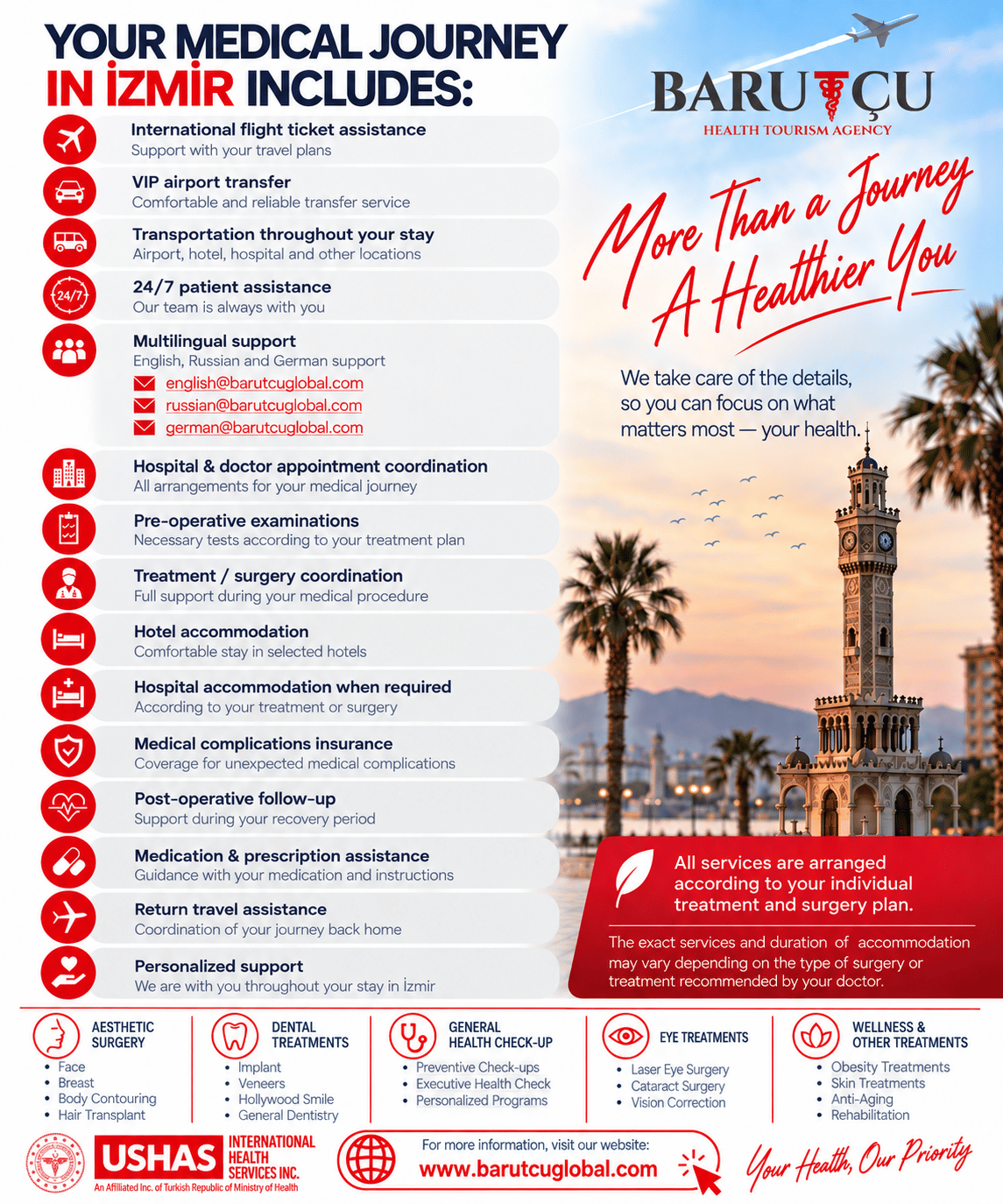
At Barutçu Global, international patients can receive guidance on coordinating consultations, treatment planning and practical travel arrangements. The final medical decision should always be made after an individual examination and detailed discussion with the treating eye specialist.