Laser Vision Correction Abroad: Preparing for Your Consultation and Planning Your Trip
Laser vision correction abroad can be an attractive option for people who want to reduce their dependence on glasses or contact lenses while combining treatment with access to international healthcare services. Türkiye, including İzmir, is considered by many international patients for ophthalmology procedures because of its experienced medical professionals, modern clinics and convenient travel connections. However, choosing laser eye surgery should never be based on price or destination alone. A safe and satisfactory experience begins with careful assessment, realistic expectations and well-organised travel planning.
This guide explains how to prepare for a laser eye surgery consultation abroad, what information to provide, how to plan your stay and which questions to ask before making a decision. It is intended for general information and does not replace an examination or personalised advice from a qualified ophthalmologist.
What Is Laser Vision Correction?
Laser vision correction is a group of procedures designed to reshape the cornea and improve the way light is focused on the retina. The most commonly discussed techniques include:
- LASIK: A corneal flap is created before the underlying tissue is reshaped with a laser. The flap is then repositioned.
- PRK or TransPRK: The surface layer of the cornea is removed or treated before laser reshaping. Recovery may be slower than with LASIK.
- SMILE: A small incision is used to remove a precisely shaped piece of corneal tissue. Suitability depends on individual eye measurements and prescription.
These procedures may be used to treat certain levels of short-sightedness, long-sightedness and astigmatism. Not every patient is suitable for every technique. The recommended procedure should be based on a complete eye examination rather than a preferred treatment name or online eligibility form.
Why Consider Laser Eye Surgery in Türkiye?
International patients often explore Türkiye for medical care because of its established private healthcare sector, access to specialist services and range of international patient support options. İzmir can be particularly convenient for patients who prefer a major coastal city with hospitals, clinics and accommodation suitable for short stays.
When comparing providers, look beyond promotional packages. Important factors include:
- The ophthalmologist’s qualifications, experience and registration
- The clinic or hospital’s quality standards and operating facilities
- The technology used for diagnostic testing and treatment
- How suitability is assessed before surgery
- The availability of post-operative reviews and emergency support
- Clear information about what is included in the quoted cost
- Communication support in English or your preferred language
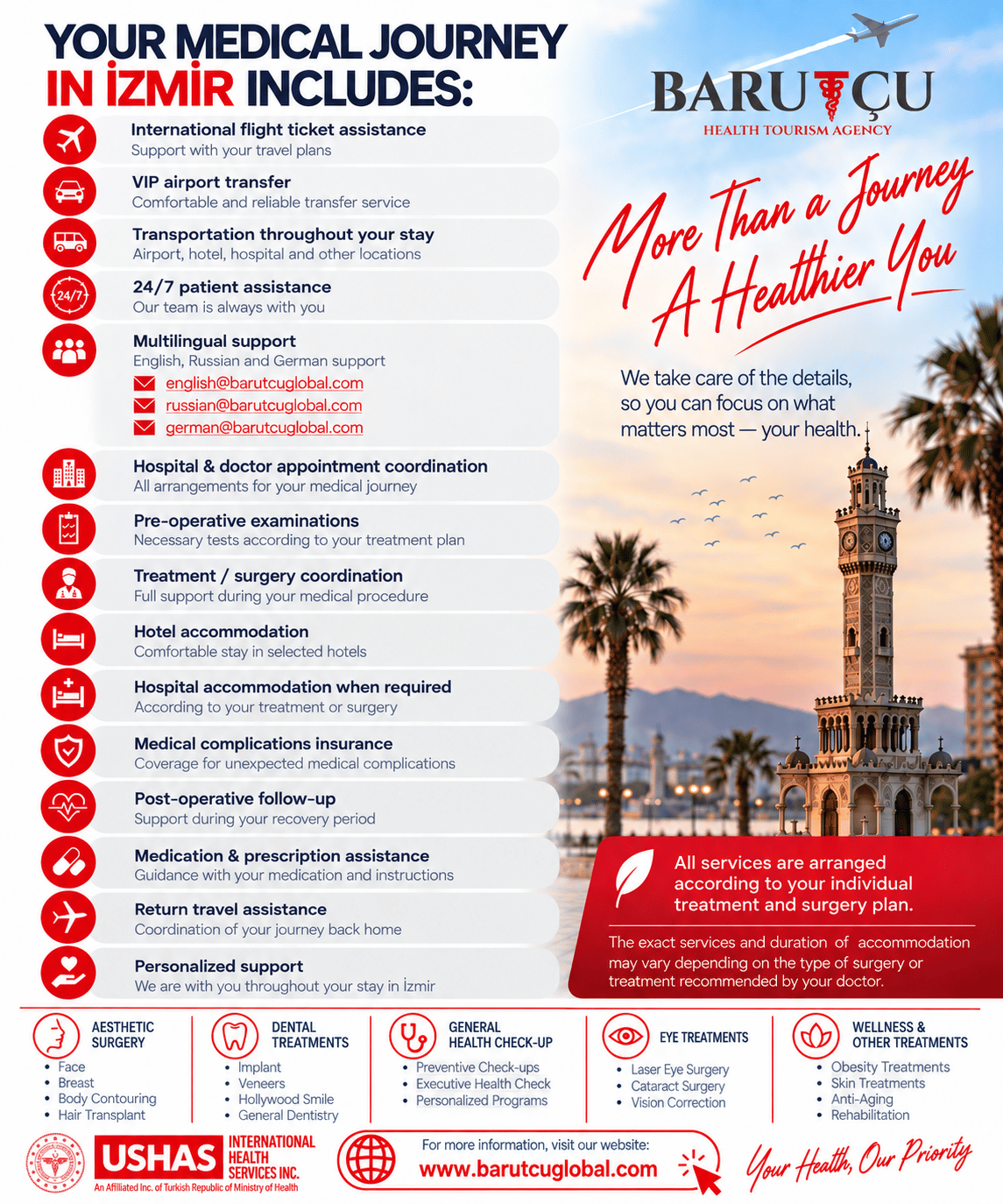
A reputable medical tourism coordinator, such as Barutçu Global, can help international patients organise communication, appointments, transfers and practical arrangements. Clinical decisions, however, should remain with the treating eye specialist.
Preparing for Your Online or In-Person Consultation
The consultation is one of the most important stages of the process. It allows the ophthalmologist to determine whether laser vision correction is appropriate and which procedure may offer the most suitable balance of safety and visual goals.
Before the consultation, prepare the following information:
- Your current glasses prescription and previous prescriptions, if available
- Details of your contact lens use, including the type and average wearing time
- Any history of eye disease, eye injury or previous eye surgery
- Information about general health conditions and regular medication
- Known allergies, particularly to medicines or eye drops
- Previous changes in your vision or prescription
- Your expectations, including work, driving, sport and lifestyle requirements
Be open about dry eye symptoms, fluctuating vision, night-driving difficulties, migraines, autoimmune conditions, diabetes or other health concerns. Some conditions may affect eligibility, healing or the choice of procedure. If you have had recent eye examinations, send only documents that are complete, legible and recent enough for the clinic to assess.
Contact Lens Use Before Assessment
Contact lenses can temporarily alter the shape of the cornea and may affect measurement accuracy. The clinic should tell you how long to stop wearing your lenses before diagnostic testing. The required period can vary depending on whether you wear soft, toric, rigid gas-permeable or hybrid lenses. Do not guess the recommended break; ask the clinic for specific instructions.
Tests Commonly Included in a Laser Eye Consultation
A thorough assessment may include several examinations rather than a simple vision chart. Depending on the clinic and your medical history, tests may assess:
- Visual acuity and current refraction
- Corneal thickness and corneal shape
- Tear film and dry eye status
- Pupil size and eye pressure
- Retinal and general eye health
- Stability of your prescription
These measurements help the ophthalmologist identify potential risk factors, rule out certain corneal conditions and decide whether LASIK, PRK, SMILE or another option is appropriate. In some cases, the safest recommendation may be to continue using glasses or contact lenses instead of having surgery.
Questions to Ask Your Ophthalmologist
International patients should feel comfortable asking detailed questions before agreeing to treatment. Consider discussing:
- Which procedure do you recommend, and why is it suitable for my eyes?
- Are there any reasons I may not be a suitable candidate?
- What temporary side effects are common during recovery?
- What complications are possible, and how would they be managed?
- Could I still need glasses for certain activities after treatment?
- How many follow-up appointments are recommended?
- Who should I contact if I have concerns after returning home?
- What restrictions apply to flying, swimming, exercise and screen use?
- What happens if my eyes are not suitable on the day of surgery?
A responsible clinic should explain both the potential benefits and the limitations of treatment. Be cautious of guarantees such as “perfect vision” or claims that surgery is risk-free. Outcomes vary according to prescription, corneal characteristics, age, eye health and healing response.
Planning Your Trip for Laser Vision Correction
Travel planning should allow enough time for consultation, surgery and at least the initial follow-up examination. The exact schedule depends on the clinic’s protocol and the procedure selected. Some patients may be able to travel within a relatively short period, while others may need additional reviews before flying home.
Before You Book Flights
Confirm the following with the clinic or medical travel coordinator:
- Whether the consultation and surgery take place on separate days
- How long you should remain in İzmir or another treatment location
- When your first post-operative examination will occur
- Whether your return flight date should remain flexible
- Which medicines and eye drops will be provided or prescribed
- What support is available outside normal clinic hours
It is generally practical to avoid scheduling surgery immediately before a demanding business meeting, long-haul flight or holiday involving swimming and intense outdoor activities. Rest, access to clean accommodation and transport to appointments are more important than filling every day of the trip with sightseeing.
Travel and Accommodation Considerations
Choose accommodation that is clean, comfortable and reasonably close to the clinic. Air conditioning, smoke, dust and strong wind may make the eyes feel uncomfortable during early recovery. Sunglasses can help reduce sensitivity to light outdoors, but they do not replace the clinic’s instructions.
Arrange airport transfers in advance if possible. Immediately after treatment, vision may be temporarily blurred or uncomfortable, so patients should not plan to drive themselves. Travelling with a companion may be helpful, particularly for the first day and for patients who feel anxious about the procedure.
What to Expect During Recovery
Early symptoms may include watering, light sensitivity, a gritty sensation, temporary blurring or fluctuations in vision. The pattern and duration of recovery differ between procedures and individuals. PRK, for example, may involve a longer surface-healing period than LASIK, while visual stabilisation can take time after any form of laser correction.
Use prescribed eye drops exactly as directed and avoid rubbing your eyes. Follow the clinic’s guidance regarding showering, cosmetics, swimming, exercise, screen use and exposure to dusty or smoky environments. Do not restart contact lens use unless your ophthalmologist confirms that it is appropriate.
Seek urgent medical advice if you experience severe or increasing pain, a sudden reduction in vision, marked redness, discharge, significant swelling or any symptom that concerns you. Before travelling, make sure you have written instructions and a contact number for the treating clinic.
Aftercare When You Return Home
Arrange follow-up with a local optometrist or ophthalmologist if recommended by your treating surgeon. Share your treatment records, prescription details, test results and discharge instructions with the local eye-care professional. Continued monitoring may be particularly important if you develop persistent dryness, visual disturbances or other unexpected symptoms.
Ask the overseas clinic how long routine follow-up remains available and whether remote reviews are possible. Clarify how complications would be assessed, where treatment would take place and whether any additional costs could apply. These details should be understood before surgery, not after a problem occurs.
A Practical Checklist for International Patients
- Obtain your recent prescription and relevant medical records.
- Ask when to stop wearing contact lenses.
- Complete a full eligibility assessment before booking treatment.
- Review the surgeon’s qualifications and the clinic’s facilities.
- Request a written treatment plan and itemised cost information.
- Allow time for post-operative checks before returning home.
- Arrange suitable accommodation and airport transfers.
- Keep insurance, passport and emergency contact details accessible.
- Take written aftercare instructions and prescribed medicines with you.
- Plan a local follow-up appointment if advised.
Conclusion
Laser vision correction abroad requires more than selecting a destination and booking a procedure. A careful consultation, accurate diagnostic testing, honest discussion of risks and realistic travel planning are central to a safe patient journey. By preparing your medical information, asking informed questions and confirming aftercare arrangements, you can make a more confident decision about treatment in İzmir or elsewhere in Türkiye. Barutçu Global can support the organisational aspects of your healthcare journey while your ophthalmologist remains responsible for medical evaluation and treatment decisions.