Facelift Abroad: How to Compare Surgical Approaches, Surgeon Credentials and Aftercare Plans
Choosing to have a facelift abroad can offer access to experienced specialists and internationally oriented medical facilities, but the decision should never be based on price alone. A safe and satisfactory experience depends on selecting the right surgical approach, verifying your surgeon’s qualifications, understanding what is included in your care, and planning recovery both in Türkiye and after you return home. This guide explains how international patients can compare facelift options, surgeons and aftercare plans when considering treatment in Izmir or elsewhere.
Why the Surgical Approach Matters
“Facelift” is not a single procedure. The technique recommended for you should reflect your facial anatomy, skin quality, degree of tissue laxity, neck concerns, previous procedures and aesthetic goals. During a consultation, a qualified plastic surgeon should explain which tissues will be addressed and why that approach is suitable.
Traditional or full facelift
A full facelift generally addresses sagging in the lower face, jawline and neck. Depending on the treatment plan, the surgeon may reposition deeper facial tissues, remove or redistribute excess skin, and refine the neck area. This approach may be considered when there is more noticeable laxity rather than isolated skin looseness.
SMAS facelift
The SMAS, or superficial musculoaponeurotic system, is a layer of connective tissue beneath the skin. SMAS-based techniques may involve tightening, repositioning or reshaping this layer to support the lower face. The exact method varies between surgeons. It is important to ask whether the plan involves plication, imbrication, lateral repositioning or another form of SMAS management, and how this relates to your individual anatomy.
Deep-plane facelift
A deep-plane facelift works in deeper anatomical layers and may be proposed for patients with significant midface and lower-face descent. Because the dissection is more advanced, the surgeon’s training and experience with this specific technique are particularly important. “Deep plane” should not be treated as a guarantee of a better result; the most appropriate technique depends on the patient, not on a marketing label.
Mini facelift and limited-incision techniques
A mini facelift may be suitable for selected patients with early or moderate lower-face laxity. It usually involves a more limited treatment area and may have a shorter recovery than a more extensive operation, although this is not universal. It may not adequately address substantial neck laxity, prominent jowls or more advanced facial ageing.
Neck lift and combined procedures
Some patients considering a facelift abroad are primarily concerned with loose skin under the chin, vertical neck bands or loss of jawline definition. A neck lift may be performed alone or combined with a facelift. In some cases, liposuction of the neck or treatment of the platysma muscle may be discussed. Combining procedures can affect operating time, recovery and medical suitability, so the benefits and additional risks should be clearly explained.
Non-surgical treatments such as fillers, energy-based treatments or thread procedures are not substitutes for a surgical facelift. A responsible consultation should include an honest discussion of whether surgery is appropriate and whether a less invasive option could address your concerns.
Questions to Ask When Comparing Facelift Surgeons
Surgeon selection is one of the most important parts of medical travel. Look beyond clinic photographs and promotional claims. You should be able to verify the professional responsible for your operation and understand where the procedure will take place.
- Is the surgeon a formally trained and registered specialist in plastic, reconstructive and aesthetic surgery?
- Is the surgeon legally authorised to practise and perform surgery in Türkiye?
- How frequently does the surgeon perform facelifts and the specific technique being recommended?
- Does the surgeon have experience with patients travelling from abroad?
- Which hospital or surgical facility will be used, and is it appropriately licensed?
- Who will provide anaesthesia, and what are their qualifications?
- Who will manage you if a concern develops after you return home?
Professional registration should be checked through the relevant official authorities where possible. A medical tourism coordinator can help organise documents and communication, but coordination is not a substitute for independently assessing the surgeon and facility.
Review before-and-after photographs carefully
Before-and-after images can be useful, but they should be interpreted cautiously. Ask whether the photographs show patients with a similar age, facial structure, skin quality and degree of laxity. Images should ideally be consistent in lighting, angle and expression. You should also ask whether the results shown are from the surgeon’s own patients and whether the photographs represent typical outcomes rather than selected examples.
A facelift can soften signs of ageing, but it does not stop the natural ageing process and does not necessarily correct every concern around the eyes, forehead or skin texture. A surgeon should discuss realistic outcomes, visible scars, asymmetry, possible revision surgery and the limitations of the procedure.
How to Evaluate a Facelift Package in Türkiye
When comparing facelift packages in Izmir or other Turkish cities, confirm exactly what is included. A lower advertised price may exclude important elements such as hospital fees, anaesthesia, medical tests, medications, compression garments, private nursing or follow-up consultations.
Request a written treatment plan that sets out:
- The proposed procedure and any additional treatments
- The surgeon, anaesthetist and hospital or clinic involved
- Pre-operative examinations and medical clearance requirements
- Accommodation and transfer arrangements, if offered
- The expected length of stay and appointment schedule
- What happens if surgery is postponed or further assessment is required
- How complications or unplanned treatment are handled
- Which services are included and which may incur additional charges
Be cautious of pressure to book quickly, promises of guaranteed results, or recommendations based only on photographs submitted online. A remote assessment can be useful for initial planning, but it cannot replace a proper clinical examination before surgery.
What a Safe Aftercare Plan Should Include
Aftercare is a core part of facelift surgery, particularly for international patients who will eventually travel home. Before booking, ask for a clear schedule covering the period immediately after surgery, the remainder of your stay and the transition to care in your home country.
Immediate post-operative monitoring
Following surgery, you should receive appropriate observation and instructions regarding dressings, drains, pain relief, sleeping position, wound care and activity. The medical team should explain which changes are expected during early recovery and which symptoms require urgent assessment.
Follow-up appointments in Türkiye
Your plan may include wound checks, dressing changes, drain removal where applicable and suture removal. The timing depends on the technique and the surgeon’s protocol. Do not arrange flights solely around a standard package itinerary; your surgeon should confirm that you are medically fit to travel.
Communication after returning home
A reliable provider should explain how you can contact the surgical team after leaving Türkiye. Ask whether follow-up is conducted by secure video consultation, email, telephone or through a local doctor. You should also identify a qualified healthcare professional in your home country who can assess you if necessary.
Travel and recovery planning
Flying soon after surgery may increase discomfort and may carry additional risks, including problems related to reduced mobility. The appropriate time to travel varies according to the operation, your health and your surgeon’s assessment. Arrange enough time in Izmir for post-operative reviews, and avoid planning strenuous activities, beach holidays or tightly scheduled sightseeing during early recovery.
Before travelling, ask for a medical summary, operative details, medication list and contact information for the hospital and surgeon. Keep these records available for your doctor at home.
Potential Risks and Warning Signs
Facelift surgery, like any operation, may involve risks such as bleeding, infection, fluid collection, delayed healing, numbness, hair loss near the incision, visible scarring, asymmetry, nerve-related changes and the possibility of revision surgery. Individual risk can be influenced by smoking, certain medications, medical conditions and previous facial procedures.
Seek prompt medical advice if you experience rapidly increasing swelling, severe or worsening pain, heavy bleeding, fever, shortness of breath, chest pain, marked skin colour changes or any symptom that concerns you. Your provider should give you written emergency instructions rather than relying only on informal messaging.
Making an Informed Decision About Facelift Abroad
The best facelift abroad experience is based on transparent communication and continuity of care. Compare surgeons by qualifications, relevant experience, surgical philosophy, facility standards and the quality of their explanations—not simply by package price or online reviews. Consider whether the recommended procedure addresses your actual concerns and whether you have enough time for recovery before returning home.
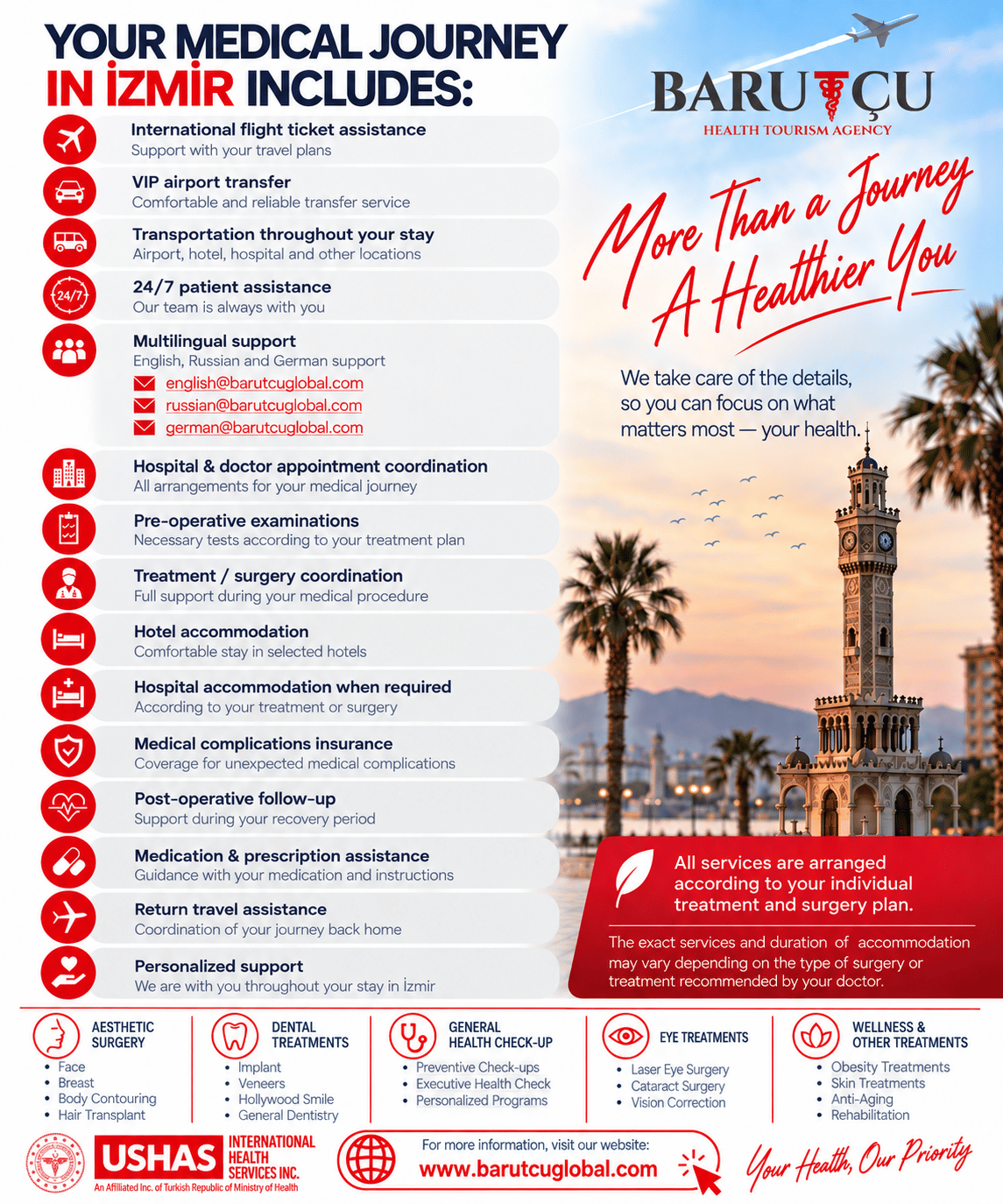
For international patients considering a facelift in Izmir, Barutçu Global can support the coordination process by helping organise consultations, treatment information, travel logistics and communication with healthcare providers. Patients should still receive a direct medical consultation with the surgeon and make decisions based on individual clinical advice.
Conclusion
Choosing a facelift in Türkiye requires careful comparison of technique, surgeon credentials and aftercare arrangements. A trustworthy plan should explain what will be treated, who will perform the surgery, where it will take place, what recovery involves and how support will continue after you return home. With realistic expectations, verified medical information and sufficient recovery time, international patients can approach facial aesthetic surgery with greater confidence and safety.