Medical Tourism Package Contracts: Questions About Deposits, Changes, Cancellations and Refund Terms
Planning medical treatment abroad involves more than choosing a procedure and arranging travel. Before you confirm your appointment, it is important to understand the medical tourism package contract, including what you are paying for, how deposits are handled, what happens if your plans change, and whether you can receive a refund. Clear contract terms help international patients make informed decisions and avoid unexpected costs.
At Barutçu Global, we believe patients should receive understandable information before committing to healthcare services, accommodation, transfers or other travel arrangements in İzmir and throughout Türkiye. This guide explains the main points to review in a medical tourism contract. It is general information, not legal advice, and the contract you receive should always be reviewed carefully before signing or making payment.
What Is a Medical Tourism Package Contract?
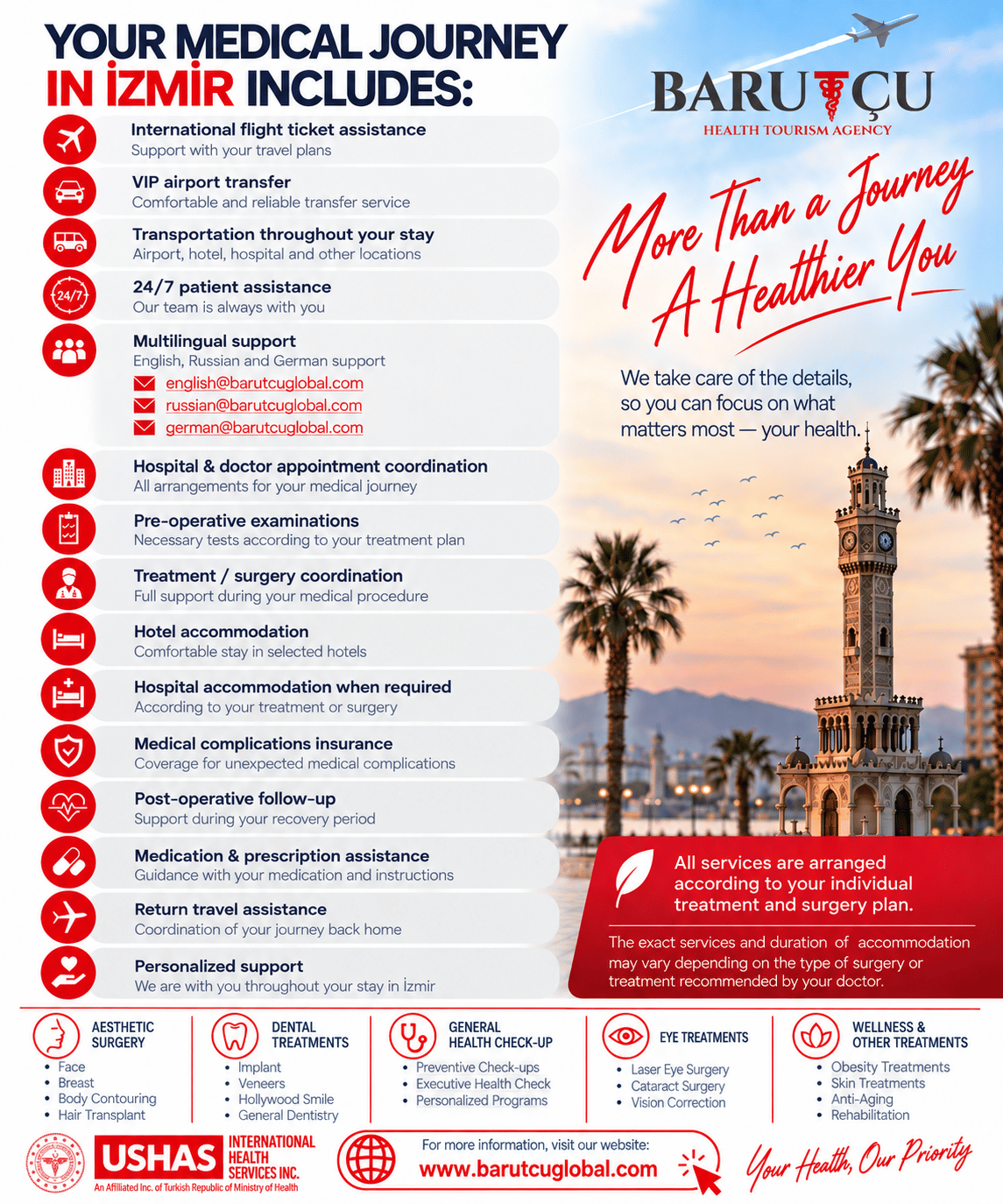
A medical tourism package contract is a written agreement between the patient and the healthcare facilitator, clinic, hospital or other service provider. Depending on the arrangement, it may cover medical care as well as non-medical services such as airport transfers, hotel accommodation, interpreter support and follow-up coordination.
The contract should clearly identify:
- The patient and the contracting company or healthcare provider
- The planned procedure or medical service
- The clinic, hospital or treatment location
- The services included in the package
- The total price and payment schedule
- Deposit requirements and payment deadlines
- Rules for rescheduling, cancellation and refunds
- Possible additional costs and exclusions
- The procedure for complaints, disputes and communication
If a promise was made during a phone call, online consultation or messaging conversation, ask whether it will be included in the written agreement. Verbal assurances can be difficult to verify later if they are not reflected in the contract or an official written confirmation.
Questions to Ask About the Deposit
Many medical tourism providers request a deposit to reserve a treatment date, operating room, accommodation or other services. A deposit may be reasonable, but the contract should explain exactly how it works.
Is the deposit refundable?
Do not assume that a deposit is refundable simply because the procedure has not yet taken place. Some deposits are fully refundable before a stated deadline, while others may be partly or entirely non-refundable once appointments, flights, hotel rooms or medical resources have been reserved.
Ask the provider:
- What percentage or amount is required as a deposit?
- What expenses does the deposit cover?
- Is it refundable if I cancel?
- Is it transferable to a new treatment date?
- Will it be deducted from the final treatment balance?
- What happens if the provider cancels or cannot deliver the agreed service?
When is the remaining balance due?
The contract should state when the balance must be paid. Some providers request payment before arrival, while others may require payment before treatment or on a specified day. It should also explain which payment methods are accepted, whether transaction charges apply and which currency will be used.
For your records, keep payment confirmations, invoices and receipts. Paying into a company account identified in the contract is generally easier to document than sending money to an unrelated personal account. If payment instructions change by email or message, verify them through an official contact channel before transferring funds.
What Does the Package Include?
“All-inclusive” and “complete package” can mean different things to different providers. Ask for an itemised description rather than relying on a general package label.
A medical tourism package may include some of the following:
- Pre-treatment consultation or medical assessment
- Laboratory tests or imaging, if required
- Surgeon, physician or specialist fees
- Facility, operating room or hospital fees
- Anesthesia and prescribed medication during the treatment period
- Post-treatment checks included in the agreed schedule
- Airport and local transfers
- Hotel accommodation and the number of included nights
- Interpreter or patient coordinator support
It may exclude flights, travel insurance, additional nights, treatment for unrelated conditions, extra tests, revision procedures, medication purchased after discharge or costs resulting from a longer stay. The contract should explain how these additional services are priced and approved.
Changing Your Treatment Date or Travel Plans
International travel plans can change because of work, family responsibilities, airline disruption, medical concerns or changes in personal circumstances. A well-written contract should explain how to reschedule treatment and whether administrative or supplier charges apply.
Important questions include:
- How much notice is required to change the treatment date?
- Can the deposit be moved to another date?
- How many times can an appointment be rescheduled?
- Will a new hotel or transfer booking create additional costs?
- What happens if the selected doctor or facility is unavailable?
- Can the procedure be changed after medical assessment?
A treatment plan may need to change after an in-person examination or review of medical records. The final suitability of a procedure is a clinical matter and cannot always be confirmed remotely. The contract should clarify whether a different treatment recommendation affects the package price and whether you may decline the alternative without losing your deposit.
Cancellation and Refund Terms
Cancellation clauses deserve careful attention because they often distinguish between different stages of the journey. The refund available before medical services are scheduled may not be the same as the refund available after a consultation, hotel booking or procedure has taken place.
Check whether the contract provides separate rules for:
- Cancellation shortly after booking
- Cancellation before travel
- Cancellation after arrival in Türkiye
- Cancellation after pre-operative tests or consultation
- Cancellation on the day of treatment
- Cancellation because the patient is not medically suitable
- Cancellation by the provider, clinic or hospital
The terms should state how any refund is calculated. For example, the provider may deduct services already delivered, non-refundable supplier charges or reasonable administrative costs. These deductions should be described clearly rather than presented as an undefined “cancellation fee.”
What if the patient is not medically cleared?
A doctor may decide that treatment should be postponed or is not appropriate after reviewing your medical history, examination results or current health status. Ask in advance what happens to your deposit and any prepaid package services in this situation.
A responsible provider should not pressure you to proceed when a clinician advises against treatment. However, medical unsuitability does not automatically determine the financial outcome. The contract may distinguish between a refund of unprovided medical services and costs already paid to third parties, such as accommodation or transportation.
What if the provider cancels?
The contract should explain your options if the clinic, doctor or facilitator cannot provide the agreed service. Depending on the circumstances, you may be offered a new date, an alternative qualified provider or a refund for services that were not delivered. Ask whether the provider has a process for handling cancellations caused by staffing issues, facility problems or other operational events.
Force Majeure, Travel Disruption and Insurance
Contracts may include a force majeure clause covering events outside the reasonable control of the parties, such as natural disasters, major transport disruption, government restrictions or serious public emergencies. Read this section carefully. It may explain whether the solution is a postponement, credit, partial refund or another arrangement.
Travel insurance and medical travel insurance may provide protection that the package contract does not. Before travelling, check whether your policy covers cancellation, missed transport, medical complications, emergency treatment and repatriation. Some policies exclude treatment obtained abroad or elective procedures, so confirm the conditions in writing.
Currency, Taxes and Additional Charges
International patients should understand whether the contract price is fixed or subject to change. Ask which currency applies, how exchange-rate differences are handled and whether taxes, card charges or bank fees are included.
Also request information about possible extra costs, including:
- Additional hotel nights or local transportation
- Extra diagnostic tests or specialist consultations
- Medication, medical garments or equipment
- Unexpected hospital admission or extended monitoring
- Revision treatment or follow-up outside the original package
- Services for an accompanying person
No provider can guarantee that every medical need or travel expense will be covered by a standard package. Transparency about exclusions allows you to plan responsibly.
How to Review a Contract Before Signing
Take time to read the complete agreement, including attachments, cancellation schedules and terms referred to by links. Make sure the name of the provider, treatment description, dates and prices match the information you received during your consultation.
Before paying, ask for written clarification if:
- A clause is vague or difficult to interpret
- The package description conflicts with the invoice
- The refund procedure is not explained
- There is no clear contact for complaints
- You are asked to sign an agreement you do not understand
If the contract involves a significant amount of money or complex legal terms, consider obtaining independent legal advice in your country. Keep a copy of the signed contract and all related correspondence in a secure location.
Questions to Ask Barutçu Global
When discussing a medical tourism package in İzmir or another destination in Türkiye, you can ask Barutçu Global to explain:
- Which services are included and excluded
- How the deposit is applied and whether it can be transferred
- The deadlines for rescheduling or cancellation
- How refunds are calculated and processed
- What happens if the medical plan changes after assessment
- Which costs may arise outside the original package
- Who to contact before, during and after your trip
Conclusion
A medical tourism package contract should give you a clear picture of your financial and practical responsibilities before you travel. Pay particular attention to the deposit, included services, payment deadlines, cancellation windows, refund calculations and procedures for medical or travel-related changes. Asking questions early can reduce misunderstandings and help you make a more informed decision about treatment abroad.
Barutçu Global is committed to supporting international patients with clear coordination and practical information throughout their healthcare journey. Always review your individual contract carefully and seek independent advice when necessary.