HIV and Cross-Border Care: How to Compare Clinics, Specialist Credentials and Long-Term Support
For people living with HIV, choosing care abroad is not simply a matter of finding a clinic with available appointments. Effective HIV treatment depends on continuity, confidential communication, reliable laboratory monitoring and uninterrupted access to antiretroviral therapy. As international healthcare becomes more connected, patients are increasingly comparing clinics in different countries for specialist consultations, second opinions, treatment monitoring and related medical services.
For international patients considering HIV care in Türkiye, including İzmir, the most important question is not only where treatment is provided, but how safely and consistently care will continue after the patient returns home. This guide explains what to compare when reviewing an overseas clinic, how to assess specialist credentials and which long-term support services should be discussed before travelling.
Why cross-border HIV care requires careful planning
HIV is a chronic medical condition that can be managed effectively with appropriate treatment and ongoing follow-up. Antiretroviral therapy is usually taken continuously, and decisions about medication, monitoring and treatment changes should be made by a qualified infectious diseases specialist or an appropriately trained HIV care team.
Travelling for healthcare can introduce practical challenges. These may include differences in prescribing rules, availability of medicines, laboratory reporting systems, health insurance arrangements, language, medical record formats and follow-up responsibilities. A clinic that offers a specialist consultation but cannot provide a clear continuity-of-care plan may not be suitable for a patient who needs long-term monitoring.
Patients should also consider whether their current physician can communicate with the overseas team, whether medical records can be transferred securely and what will happen if symptoms or medication-related concerns develop after returning home.
How to compare HIV clinics abroad
Clinic comparison should go beyond website design, online reviews or claims about convenience. International patients should request clear information about the clinic’s clinical team, facilities, laboratory access and follow-up process.
1. Review the clinic’s HIV-related services
Ask whether the clinic provides direct HIV care or mainly coordinates consultations with an external specialist. The distinction is important. A medical travel company, hospital international office or patient coordinator may assist with appointments and logistics, but clinical decisions should be made by licensed healthcare professionals.
Patients may wish to ask:
- Which department manages HIV care?
- Is an infectious diseases specialist involved?
- Does the clinic provide treatment reviews, second opinions or ongoing monitoring?
- Are laboratory tests available on-site or through a partner laboratory?
- Can the clinic coordinate with the patient’s doctor in their home country?
- What emergency and out-of-hours support is available?
A suitable clinic should explain the scope of its services honestly. It should not suggest that one consultation can replace long-term specialist care or guarantee a particular treatment outcome.
2. Check laboratory and diagnostic capabilities
HIV management may involve regular clinical assessments and laboratory testing. Depending on the patient’s medical history, a specialist may review viral load, CD4 cell count, kidney and liver function, blood counts, metabolic health, hepatitis status, sexually transmitted infections and other relevant factors.
Not every patient needs the same tests at the same time. The treating specialist should determine the appropriate monitoring plan based on current guidelines, treatment history and individual circumstances. Before travelling, ask how results are reported, how quickly they are available and whether copies can be provided in a format that the home-care team can use.
Patients should also confirm whether laboratory testing is performed under recognised quality procedures and whether samples are processed by the clinic or an external provider. Transparent explanations are a positive sign; vague answers about testing should prompt further questions.
Assessing HIV specialist credentials
Specialist credentials are central to safe cross-border care. Patients should verify the professional identity and registration status of any doctor responsible for diagnosis, treatment recommendations or medication changes.
Useful information to request includes:
- The doctor’s full name and professional title
- Medical registration and licensing details
- Specialty training in infectious diseases or a relevant HIV care field
- Experience managing patients receiving antiretroviral therapy
- Hospital or university affiliation, where applicable
- Languages used during consultations
- Arrangements for clinical communication after the appointment
Patients can usually verify licensing through the relevant national or professional authority. In Türkiye, international patients may ask the clinic or hospital for information about physician registration, specialist status and institutional authorisation. Verification should be completed independently where possible rather than relying only on promotional material.
Professional experience is also more meaningful when it is relevant to the patient’s needs. For example, a patient with treatment resistance, complex drug interactions, pregnancy-related concerns, hepatitis co-infection or other significant health conditions may require a team with specific expertise.
Medication continuity is a priority
Patients should never assume that a familiar HIV medicine will be available under the same brand name in another country. The active ingredients, formulation, packaging and prescribing requirements may differ. Some medicines may require a local prescription, and regulations for carrying medication across borders can vary.
Before travel, patients should discuss medication supply and documentation with their existing healthcare provider and pharmacist. A written medication list should include active ingredients, doses, allergies and any other medicines or supplements being used. Patients should not stop or change antiretroviral therapy without medical advice.
The overseas clinic should explain how it would handle a prescription review, a missed dose concern, side effects or a potential interaction with another medicine. A responsible provider will also clarify whether the patient’s home physician remains the primary prescriber after the consultation.
Travel planning may also involve confidentiality. Medication packaging, airport security questions and insurance documents can create privacy concerns. Patients should ask the clinic for practical guidance while remembering that border and customs requirements must be checked with official authorities.
Confidentiality and respectful, stigma-free care
Privacy is an essential part of HIV healthcare. Before booking, patients should understand how personal and medical information will be collected, stored and shared. This includes information sent to interpreters, travel coordinators, laboratories, insurers and family members.
Ask whether the clinic uses secure communication systems, obtains consent before sharing records and allows patients to control who receives updates. Patients should also be able to request discreet appointment arrangements where appropriate.
Respectful communication matters just as much as technical expertise. HIV care should be non-judgemental and inclusive, regardless of nationality, gender, sexual orientation, relationship status or immigration situation. A clinic that uses stigmatising language or pressures a patient to disclose information unnecessarily should be treated with caution.
Long-term support after returning home
The strongest cross-border care plans define what happens after the patient leaves the country. A written follow-up plan may include the consultation summary, test results, medication review, recommended monitoring and contact details for further questions.
Patients should ask:
- Will the specialist provide a written report?
- Can records be sent securely to the patient’s doctor?
- Is remote follow-up available, and under which rules?
- Who should be contacted about side effects or new symptoms?
- What happens if treatment recommendations differ between doctors?
- Are additional consultations included or charged separately?
Telemedicine can support communication, but it does not replace in-person assessment when physical examination, urgent testing or immediate treatment is necessary. The legal availability of remote consultations also differs between countries. Patients should confirm these arrangements before travelling rather than assuming that international follow-up will be available.
Questions to ask a clinic in İzmir or elsewhere in Türkiye
İzmir is an important healthcare and travel destination, and international patients may value its medical facilities, transport links and multilingual patient services. However, location alone should not determine the choice of provider. When comparing an HIV clinic or hospital in İzmir, patients should ask for a detailed care pathway covering specialist review, laboratory testing, medication planning, documentation and follow-up.
It is also sensible to request a transparent estimate of consultation, laboratory, translation and coordination costs. Patients should confirm what is included and whether additional services are optional. Any provider offering a guaranteed cure, guaranteed viral suppression or a treatment decision without reviewing medical records should be avoided.
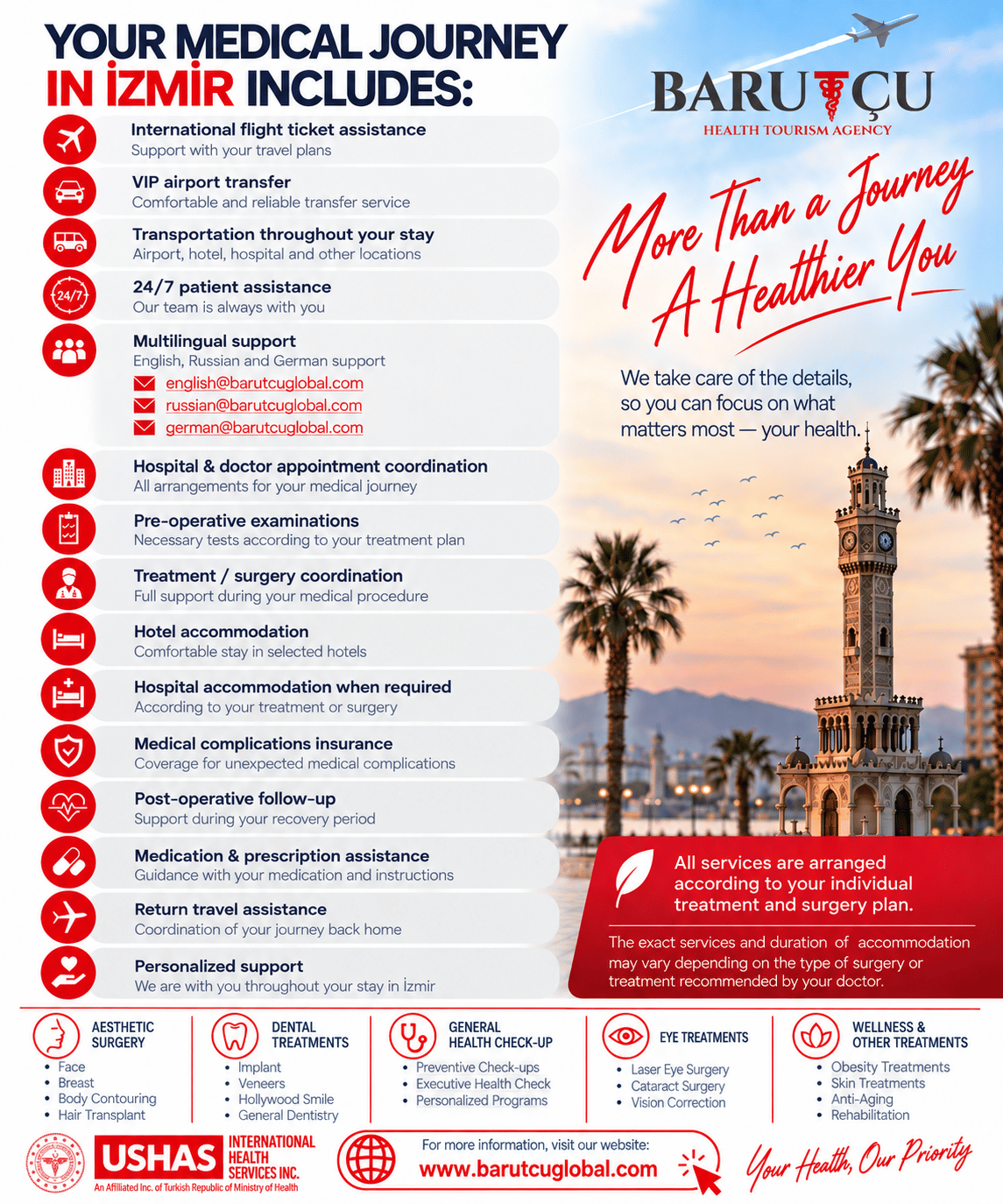
Barutçu Global can help international patients understand appointment planning and healthcare coordination in Türkiye. Clinical decisions, however, must remain with the licensed medical team, and patients should be encouraged to involve their regular HIV specialist in all major treatment discussions.
What this means for international patients
Cross-border HIV care can be appropriate for selected consultations, specialist opinions or treatment planning, but it should be organised as a coordinated medical process rather than a short-term travel purchase. The safest approach is to compare clinical expertise, laboratory standards, confidentiality policies, medication continuity and post-visit support together.
In summary, the right clinic is not necessarily the one with the most attractive marketing or fastest appointment. It is the provider that can demonstrate qualified HIV expertise, communicate clearly with the patient’s existing doctors, protect privacy and offer a realistic long-term follow-up plan. Before travelling to İzmir, Türkiye or any other destination, patients should gather their medical records, discuss the plan with their current healthcare provider and confirm every practical detail in writing.