Medical Tourism Complication Insurance: What to Ask Before Treatment
Travelling abroad for medical treatment can offer access to experienced specialists, modern facilities and carefully planned care. However, every procedure carries potential risks, and treatment in another country can create additional practical and financial concerns. Medical tourism complication insurance is designed to help eligible patients manage certain unexpected costs if a covered complication occurs after treatment.
Before travelling to Izmir or another destination in Türkiye, it is important to understand what a policy actually covers, what it excludes and how the claims process works. Insurance terms vary significantly between providers, procedures and patient circumstances. The information below is a practical guide to the questions international patients should ask before purchasing a policy or confirming treatment.
What is medical tourism complication insurance?
Medical tourism complication insurance is a specialised policy that may provide financial support when a recognised complication develops after an eligible medical or cosmetic procedure abroad. Depending on the policy, cover may contribute towards certain additional medical costs, corrective treatment, hospital care or other defined expenses.
This type of insurance is not the same as a guarantee that treatment will be successful. It also does not replace careful provider selection, informed consent, appropriate aftercare or ordinary travel insurance. The policy wording determines whether a particular event qualifies as an insured complication.
Why should international patients consider complication insurance?
Having treatment abroad may involve costs that are difficult to predict, particularly if a patient needs additional care after returning home. A suitable policy can provide an extra layer of financial protection for specific risks that may not be covered by standard travel insurance.
It may also encourage patients to review important details before treatment, including the clinic’s credentials, the surgeon’s qualifications, the planned follow-up arrangements and the responsibilities of each party if further care is needed.
Insurance cannot remove medical risk. Its value depends on the policy’s definitions, limits, exclusions and claims requirements. Patients should therefore treat it as one part of a broader medical travel plan.
What can medical tourism complication insurance cover?
Coverage varies, but a policy may include some of the following benefits when the complication meets the policy conditions:
- Additional medical treatment related to a covered complication
- Hospital or surgical costs within stated limits
- Corrective or revision treatment, subject to approval and eligibility
- Emergency medical expenses connected with the insured procedure
- Additional accommodation or travel costs in limited circumstances
- Repatriation or transfer arrangements, where specifically included
- Support with claim documentation and communication with the insurer
Some policies apply only to complications diagnosed within a defined period after treatment. Others may require the patient to receive care from an approved provider or obtain the insurer’s authorisation before undergoing further treatment. A benefit may be subject to a maximum amount, excess, waiting period or sub-limit.
Does the policy cover every problem after surgery?
No. A policy generally responds only to events that fit its definition of a covered complication. Symptoms such as discomfort, swelling, bruising or temporary changes may be expected parts of recovery rather than insured complications. Conversely, a serious medical issue may still be excluded if it relates to a pre-existing condition, a policy breach or an excluded procedure.
The distinction between an expected side effect, an unsatisfactory cosmetic result and a medically recognised complication is especially important. Ask the insurer to explain these terms in plain English and request written confirmation wherever possible.
What are the common exclusions?
Exclusions differ between providers, but medical tourism insurance commonly limits or excludes certain situations. These may include:
- Pre-existing medical conditions that were not disclosed or accepted
- Complications resulting from inaccurate or incomplete medical information
- Elective revision surgery undertaken only because the patient is dissatisfied with the result
- Procedures or treatments not listed on the certificate of insurance
- Complications caused by alcohol, recreational drugs or failure to follow medical advice
- Care received from an unauthorised provider or without the insurer’s approval
- Costs above the policy limit or outside the covered treatment period
- Routine aftercare, medication or travel costs unless expressly included
- Complications connected to pregnancy or unrelated medical conditions
- Claims arising from fraud, deliberate acts or material misrepresentation
Some policies may also exclude particular high-risk procedures, combined operations or treatment in certain locations. Never rely on a general summary alone; review the full terms, conditions and exclusions before purchase.
Are pre-existing conditions covered?
Usually, pre-existing conditions require specific disclosure and assessment. A pre-existing condition may be a diagnosed illness, previous surgery, ongoing symptom, medication use or medical issue that could affect the procedure or recovery.
Failing to disclose relevant information can create serious problems if a claim is later made. Patients should provide accurate details about their medical history, including previous procedures, allergies, current medication and relevant lifestyle factors. Ask whether the insurer has accepted the condition, excluded it or imposed special terms.
Does standard travel insurance cover surgery abroad?
Standard travel insurance may not cover planned medical treatment undertaken overseas. Many travel policies exclude elective procedures, complications arising from treatment arranged before travel or medical expenses related to a purpose-built medical trip.
Travel insurance may still be useful for unrelated emergencies, baggage, cancellation or other travel risks, depending on the policy. However, it should not be assumed to provide medical tourism complication cover. Ask the travel insurer specifically whether planned treatment abroad and resulting complications are included.
What questions should I ask the insurer before treatment?
Before purchasing cover, ask direct and specific questions. Useful questions include:
- Is my exact procedure covered under the policy?
- Are all planned procedures listed individually on the policy documents?
- What does the insurer define as a “complication”?
- Are revision surgery, corrective treatment and emergency care included?
- How long does coverage continue after the procedure?
- Is there a waiting period before benefits become available?
- What are the total benefit limits, sub-limits and excesses?
- Are pre-existing conditions covered or excluded?
- Must I obtain prior approval before receiving additional treatment?
- Can I receive care in my home country, Türkiye or only from approved providers?
- What documents are required to submit a claim?
- Who pays the medical provider, and who is responsible for upfront costs?
- What is the emergency contact process outside normal business hours?
- What circumstances could invalidate the policy?
Ask for answers in writing. Telephone explanations may be helpful, but the policy wording and insurance certificate normally determine the insurer’s formal obligations.
What documents may be needed for a claim?
Insurers may request evidence that the treatment took place, that a complication occurred and that the claimed expenses are connected to the insured procedure. Depending on the policy, this may include:
- The insurance certificate and completed application
- Medical records and operative reports
- Pre-treatment assessments and informed consent documents
- Clinical photographs or diagnostic results, where relevant
- Invoices, receipts and payment records
- Letters from the treating doctor or another qualified clinician
- Travel documents and dates of treatment
- Evidence that the insurer was contacted within the required timeframe
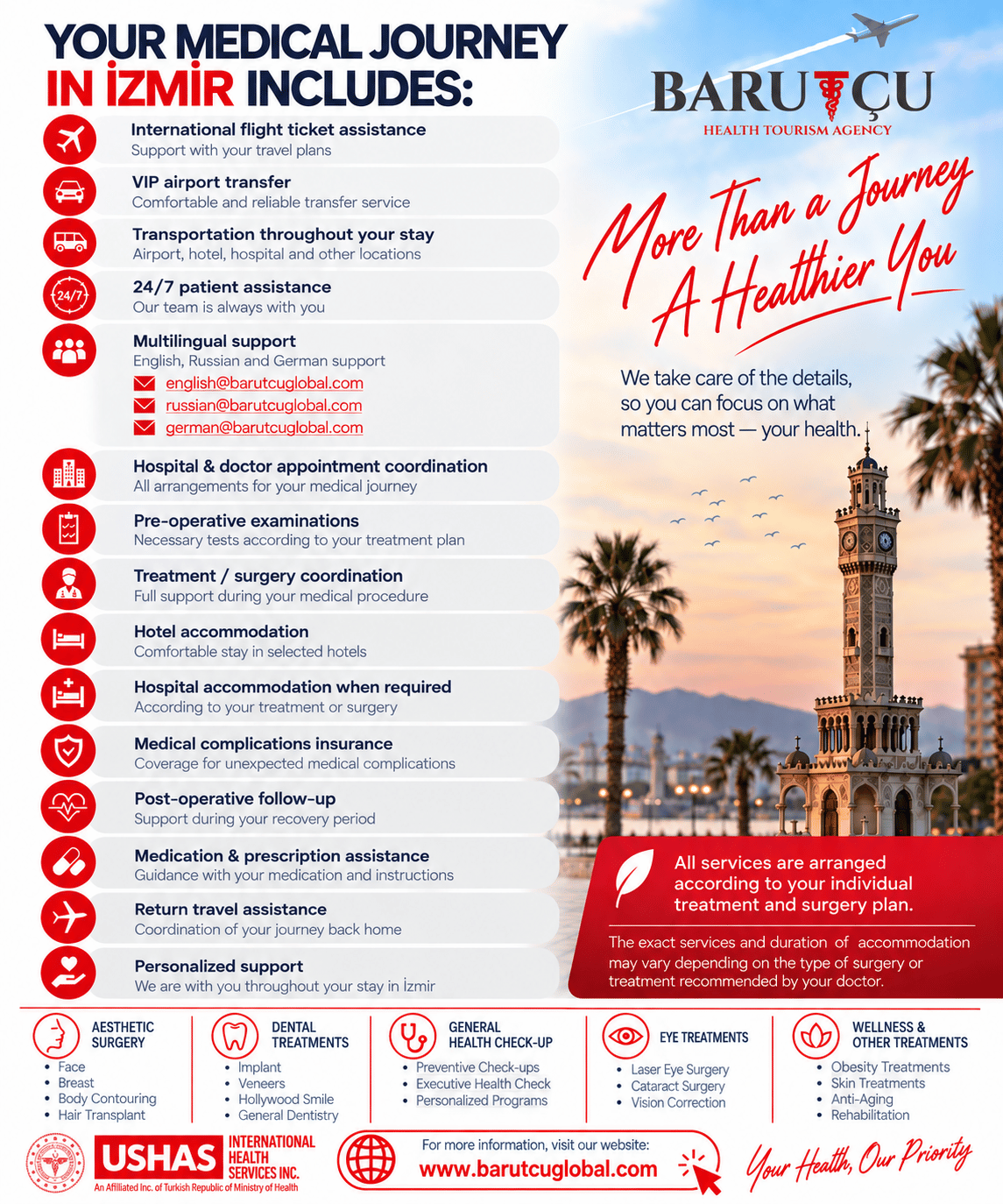
Keep copies of all correspondence and medical documents. If records are issued in Turkish or another language, ask whether certified translation is required. Barutçu Global can help international patients understand the administrative steps connected with their treatment journey, but insurance decisions are made by the insurer according to the policy terms.
What should I check about aftercare and follow-up?
Insurance is only one part of complication planning. Before travelling, ask the clinic or hospital:
- Who will provide follow-up care after I return home?
- How can I contact the medical team if I have concerns?
- How long should I remain in Izmir or Türkiye after treatment?
- What follow-up appointments are included in the treatment plan?
- What happens if another procedure is medically recommended?
- Which costs are included by the provider and which are my responsibility?
Patients should also arrange appropriate postoperative support at home and follow the treating clinician’s instructions. If concerning symptoms develop, seek prompt medical advice. An insurance policy should never delay urgent medical assessment.
Can the clinic or medical travel agency arrange the insurance?
Some clinics, hospitals or medical travel companies may offer access to an insurance product or help patients arrange cover. However, patients should understand whether the policy is issued by an independent insurer, what role the provider plays and who handles claims.
Ask whether purchasing the policy is optional, what procedures are included and whether the coverage remains valid if you choose a different doctor or receive follow-up care elsewhere. Review the documents yourself rather than relying only on promotional descriptions.
How can I compare medical tourism insurance policies?
Price should not be the only factor. Compare the scope of coverage, procedure eligibility, exclusions, benefit limits, geographical restrictions, claims process and support available during an emergency.
Check whether the policy covers the full treatment plan, including combined procedures. Confirm the dates carefully, particularly if your operation or return journey changes. It is also important to verify that the insurer is authorised to provide the policy in your country of residence and that you understand any consumer protection or dispute-resolution arrangements.
What is the most important step before buying cover?
Read the policy wording before treatment is booked or travel arrangements become difficult to change. Ask questions about anything unclear and disclose your medical history accurately. If necessary, request an independent explanation from a qualified insurance adviser or legal professional in your country.
Conclusion: plan protection as carefully as treatment
Medical tourism complication insurance may help protect international patients from certain unexpected expenses, but it is not universal coverage and does not guarantee a particular medical result. Understanding covered complications, exclusions, limits and claims procedures is essential before treatment abroad.
When planning care with Barutçu Global in Izmir, Türkiye, discuss your treatment schedule, provider credentials, aftercare arrangements and insurance requirements in advance. A well-informed decision combines appropriate medical evaluation, realistic expectations, clear communication and carefully reviewed insurance documents.