Rights of Foreign Patients in Health Tourism
For patients planning treatment abroad, knowing their rights is just as important as choosing the right healthcare provider. Differences in language, culture, healthcare systems, and legal procedures may raise various questions from the pre-treatment stage through to post-discharge. Foreign patients receiving healthcare services in Türkiye have fundamental patient rights, including the right to receive information, access safe healthcare, privacy, and respectful treatment, regardless of their citizenship. At Barutçu Global, this guide clearly addresses the key points that international patients should consider when receiving healthcare services in Türkiye and, when necessary, in İzmir.
Basic patient rights of foreign patients
Every individual receiving healthcare services in Türkiye has certain fundamental rights within the framework of applicable legislation and the patient rights practices of the healthcare institution. These rights apply not only during treatment but also throughout the decision-making, communication, and post-treatment follow-up processes.
- Right to be informed: Patients have the right to receive clear information about their health condition, the proposed procedure, potential benefits, risks, alternatives, and possible consequences of not undergoing treatment.
- Right to provide or refuse consent: After receiving sufficient information, patients may consent to a medical procedure or refuse it within the framework permitted by applicable legislation.
- Right to privacy and confidentiality: Examinations, tests, treatment, and personal health data must be protected in accordance with the principles of confidentiality.
- Right to safe and respectful care: Patients should receive care without discrimination, with their physical and psychological safety protected, and through respectful communication.
- Right to access health records: Patients may request information about their medical records, test results, and treatment documents. The method and scope of document delivery may vary according to the institution’s procedures.
- Right to provide feedback and file complaints: Patients experiencing problems with the service may contact the institution’s patient rights unit or the relevant official channels.
What to know before treatment
Research the healthcare provider’s competence and scope of services
It is important to research whether the hospital, clinic, or medical center is authorized to provide the relevant healthcare service. The institution’s experience, the medical technologies used, the physicians’ areas of specialization, the availability of an international patient unit, and emergency plans should be evaluated. When receiving healthcare services במסגרת health tourism in Türkiye, verifying that the institution operates in compliance with the relevant official regulations provides a safe starting point.
In cities with well-developed healthcare infrastructure, such as İzmir, there may be institutions offering services across different specialties. However, the reputation of a city or institution alone is not a sufficient criterion. The specialist expertise, standard of care, and follow-up options appropriate to the patient’s individual healthcare needs should be assessed together.
Request the treatment plan and pricing in writing
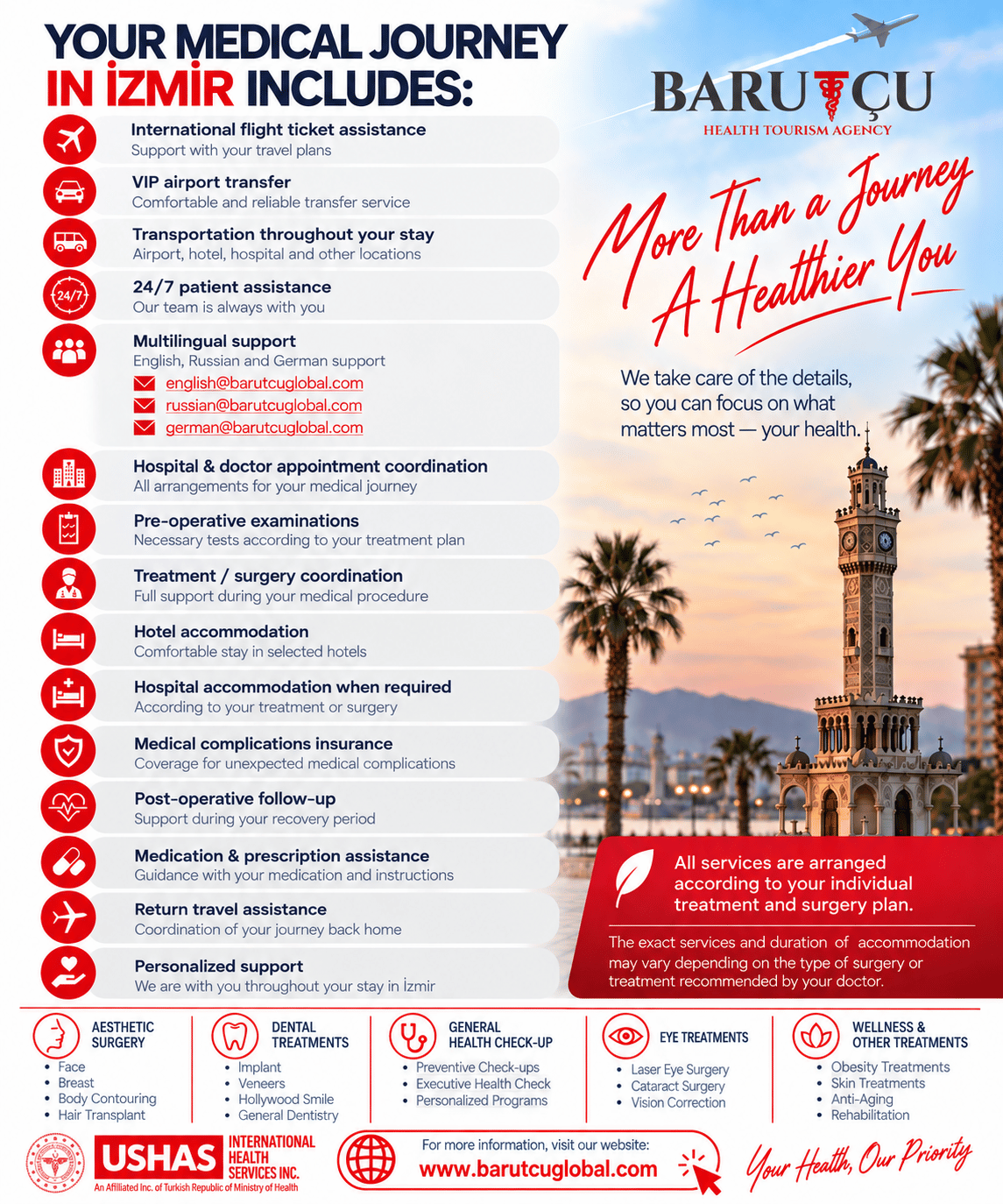
International patients should obtain the treatment plan and estimated costs in writing whenever possible. The document provided should clearly state the scope of the procedure, the method to be used, the length of hospital stay, follow-up appointments, medications, laboratory and imaging services, and whether items such as transfers, accommodation, and interpreting services are included.
Patients should always ask which services are covered by expressions such as “all-inclusive” or similar terms. The costs of additional tests, complications, an extended hospital stay, or situations requiring further intervention should be clarified in advance. No healthcare institution can guarantee medical outcomes with certainty. Therefore, patients should assess statements involving success rates or promises of results within a scientific and medical framework.
Do not sign the informed consent form without understanding it
An informed consent form is not merely a document that must be signed. It is an important process demonstrating that the patient understands the proposed procedure and its potential outcomes. If the wording of the form is unclear, the patient may request an explanation and interpretation. If necessary, the purpose of the procedure, its alternatives, risks, recovery period, and post-treatment restrictions should be explained again by the physician.
Consent does not eliminate the patient’s right to ask questions. If a change in the treatment plan or the need for an additional procedure arises during treatment, the patient is generally expected to provide separate consent except in emergencies. If a different legal process is required due to the patient’s decision-making capacity, age, or specific health conditions, the institution’s authorized personnel and relevant specialists should provide the necessary information.
Right to language support and communication
A language barrier can increase the risk of misunderstandings in health tourism. Foreign patients have the right to receive explanations about their diagnosis, procedure, medication use, risks, and discharge instructions in a language they can understand. This communication should be provided not only during the sales or organizational stages but also during consultations with physicians and nursing services.
Professional interpreting support is particularly important for surgical procedures, consent forms, and discharge documents. Translation provided by relatives may not always be sufficient. Patients should learn in advance who the interpreter is, how the service is charged, and how the confidentiality of their health information will be protected. They should not sign any document they do not understand without receiving an explanation.
Privacy and protection of personal health data
Passport information, medical reports, imaging results, photographs, and communication records may constitute personal data. Patients have the right to ask for what purpose their data is collected, with whom it may be shared, and how long it will be retained. In Türkiye, the processing of personal health data must be carried out within the framework of the relevant personal data protection rules and healthcare legislation.
The use of photographs and videos, sharing on social media, or publishing before-and-after treatment images for promotional purposes may require the patient’s explicit consent. Receiving treatment does not mean agreeing to appear in promotional materials. Patients may request separate and clear information about any images and information that will be used for promotional purposes.
Points to consider when traveling and entering Türkiye
Health tourism does not consist solely of the hospital process. Visa or entry requirements, passport validity, travel insurance, accommodation, airport transfers, and plans for leaving the country after treatment should be checked in advance. Since visa rules vary according to the country and the individual’s citizenship, up-to-date information should be verified through official authorities.
Long flights, surgical procedures, or treatments requiring restricted mobility may not be suitable for every patient. Before setting a flight date, patients should ask their physician about the safest time to travel and the necessary precautions. If medical support is required during airport transfers, this should be communicated in advance. The patient should carry information about which healthcare provider to contact in an emergency and whom to contact for assistance.
Rights during treatment and at the hospital
During the treatment process, patients may ask questions about the procedures to be performed and request a reasonable explanation from the healthcare team. Identity verification, the correct use of medications, infection control, and safe care practices are important for patient safety. If patients experience a situation that makes them uncomfortable, an unexpected symptom, or a communication problem, they should inform the healthcare team without delay.
Rules concerning companions, visitors, room changes, or interpreting services may vary according to the institution’s policies and clinical requirements. These practices should therefore be clarified in advance. In matters that are not medically urgent, considering the patient’s reasonable requests and explaining why they cannot be accommodated are part of trust-based communication.
Discharge and post-treatment rights
Before discharge, patients should receive clear information about post-procedure care, medications, follow-up dates, wound care, movement restrictions, and symptoms requiring urgent medical attention. Whenever possible, patients are advised to obtain a written discharge summary, prescription, test results, and relevant medical reports. These documents facilitate communication with the patient’s physician in their home country.
International patients should learn which channel they can use to receive follow-up support after leaving Türkiye. Options such as video consultations, email communication, or coordination with a local physician may vary according to the service agreement. If an unexpected symptom develops after treatment, the patient should seek emergency medical care in their home country and contact the healthcare team in Türkiye as soon as possible.
What should be done if a problem occurs?
When a dispute or service-related problem occurs, the first step is to communicate the situation clearly and in writing to the relevant healthcare institution. The institution’s international patient unit, patient rights unit, or administration may be contacted. Submitting the complaint with the date, procedure, relevant individuals, and requested resolution clearly stated makes the process easier to understand.
If a resolution cannot be reached, the patient may, depending on the nature of the issue, contact the relevant official institutions, health authorities, or legal advisers. Contracts, payment documents, medical reports, emails, and correspondence should be retained. Since legal rights may vary depending on the country, the nature of the service, and the circumstances of the incident, it may be appropriate to seek advice from an authorized legal professional in Türkiye when necessary.
Conclusion
The rights of foreign patients in health tourism include access to accurate information, voluntary consent, safe care, language support, protection of personal data, and accessible post-treatment follow-up. Patients planning treatment in Türkiye, particularly in cities with diverse healthcare services such as İzmir, should research the institution’s competence, the scope of costs, and communication processes in advance. Patients who know their rights, carefully review their documents, and ask their questions clearly can manage their health tourism experience in a more informed and secure manner.